

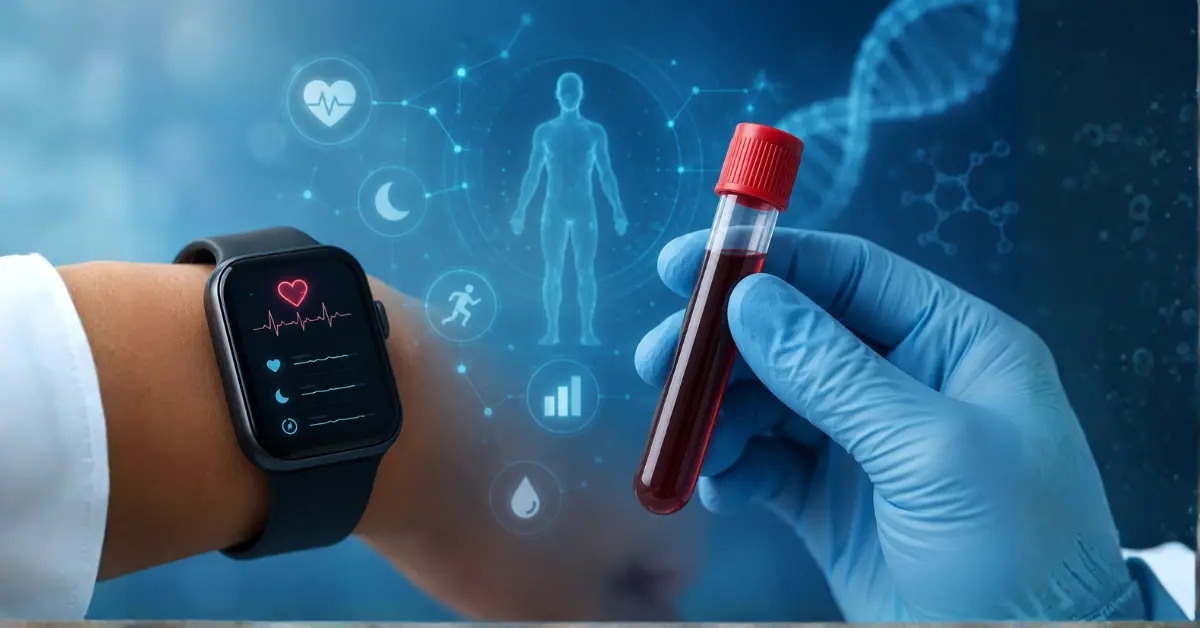
A smartwatch can tell you how many steps you took today. A blood test can reveal what’s happening deep inside your body. Separately, both are useful. Together, they could completely change the future of healthcare.
For years, people treated health tracking and medical testing as two separate worlds. Wearable devices were seen as fitness gadgets, while blood tests were conducted in clinics and hospitals. That line is quickly disappearing.
Today, wearable technology is becoming smarter, more accurate, and more health-focused. At the same time, blood testing is becoming faster, more accessible, and increasingly personalized. When these two technologies work together, they create something powerful: a continuous, data-driven picture of human health.
The future of medicine may no longer depend on one yearly checkup. Instead, it may rely on real-time health monitoring combined with personalized blood analysis.
The Evolution of Wearable Health Technology
Wearables have come a long way from simple step counters.
Modern smartwatches and fitness trackers can now monitor:
- Heart rate
- Sleep quality
- Blood oxygen levels
- Stress patterns
- Skin temperature
- Heart rhythm changes
- Activity recovery
- Calorie burn
- Respiratory rate
Millions of people now wear health trackers every day without realizing how much data they generate. Your wearable quietly records how your body behaves at work, during exercise, while sleeping, under stress, while traveling, and during illness.
Continuous tracking is the biggest advantage of wearable technology.
Traditional healthcare captures only small snapshots of your health. A doctor may check your blood pressure once every few months. But a wearable sees your body 24 hours a day. It notices trends, detects patterns, and sometimes catches subtle changes before you even feel symptoms.
However, wearables still have one major limitation: they cannot fully explain why those changes are happening inside your body.
That is where blood tests become essential.
Why Blood Tests Still Matter
Blood tests remain one of the most important tools in modern medicine because they reveal what wearable devices cannot see.
A simple blood panel can uncover:
- Vitamin deficiencies
- Hormone imbalances
- Inflammation
- Blood sugar problems
- Cholesterol levels
- Liver function
- Kidney health
- Immune system activity
- Early disease markers
For example, your smartwatch might show poor sleep and increased fatigue for several weeks. But only a blood test can reveal whether the real cause is low iron, thyroid dysfunction, vitamin B12 deficiency, or elevated cortisol levels.
Blood tests provide biological answers, while wearables provide behavioral patterns. Together, they create a much more complete understanding of health.
The Future Is Continuous Health Monitoring
The most exciting part of combining wearables with blood testing is continuous health monitoring.
Right now, most people only get blood work done once a year. That means many health issues can develop silently between appointments. Wearables, however, constantly collect information.
Imagine your smartwatch notices:
- A rising resting heart rate
- Lower recovery after workouts
- Poorer sleep quality
- Reduced heart rate variability
- Increased stress signals
On their own, these changes may seem small. But when paired with blood biomarkers, they can reveal much larger health trends.
For instance:
- Elevated inflammation markers may explain declining recovery
- Rising glucose levels may match energy crashes
- Hormonal imbalances may be connected to disrupted sleep
- Nutrient deficiencies may explain chronic fatigue
Instead of reacting to illness after symptoms become serious, healthcare could become proactive. That shift alone could transform medicine.
Personalized Healthcare Will Become the New Standard
One reason healthcare often feels frustrating is that human bodies are incredibly different.
Two people can eat the same food, follow the same workout plan, and sleep the same number of hours, yet experience completely different results.
This is where wearable data and blood testing become incredibly valuable together. They allow health recommendations to become personalized rather than generalized.
For example, one person’s wearable may show excellent recovery after intense exercise, while another person’s may show fatigue. A blood test may reveal differences in iron levels, inflammation, hormones, or hydration status.
Similarly, two people may have “normal” cholesterol levels, but their wearable data could show very different cardiovascular stress patterns.
The future of health optimization will likely combine:
- Real-time wearable tracking
- Blood biomarkers
- Artificial intelligence
- Personalized recommendations
Instead of generic advice like “exercise more” or “sleep better,” people may receive health guidance tailored specifically to their biology.
Early Disease Detection Could Improve Dramatically
One of the biggest opportunities in modern healthcare is detecting disease earlier.
Many serious illnesses develop slowly over time. Small changes often appear long before obvious symptoms. Wearables are especially good at spotting these subtle shifts.
Researchers are already studying how wearable devices may help identify:
- Heart disease
- Diabetes
- Viral infections
- Sleep disorders
- Chronic stress
- Hormonal changes
When wearable signals are combined with blood test results, the predictive power becomes even stronger.
For example, wearable devices may detect unusual heart rate patterns weeks before someone feels sick. Blood tests can then confirm whether inflammation, infection, or metabolic changes are occurring.
This combination could eventually help doctors intervene earlier and prevent disease progression.
Artificial Intelligence Will Connect Everything
The average person generates enormous amounts of health data every day. No doctor can manually analyze it all in real time.
Artificial intelligence will likely become the bridge between wearables and blood testing.
Future AI systems may analyze sleep trends, stress levels, blood sugar fluctuations, hormone changes, nutrient deficiencies, exercise recovery, and cardiovascular patterns simultaneously.
Instead of simply receiving “normal” lab results, users may receive detailed explanations about how their daily habits affect their biomarkers.
Imagine receiving alerts like:
- “Your recovery scores are declining alongside rising inflammation markers.”
- “Poor sleep patterns may be affecting glucose control.”
- “Your stress data matches elevated cortisol levels.”
This type of predictive healthcare could help people make smarter lifestyle decisions before serious health problems develop.
A New Era of Preventive Healthcare
The relationship between wearables and blood tests goes well beyond fitness tracking. It represents a shift from reactive healthcare to preventive healthcare.
Instead of waiting for symptoms, future healthcare systems may continuously monitor the body, identify subtle changes early, and recommend personalized actions before disease develops.
Your smartwatch may eventually become more than a fitness device. Combined with blood testing and AI, it could become an early warning system for your health.
The future of medicine may not happen only inside hospitals. It may happen quietly on your wrist and inside your blood.
Author
-

Aachal Singh is a DHA-licensed registered nurse in Dubai, currently working with JPR Home Health Care. She brings precision and expertise in blood testing, laboratory procedures, and immunity-focused care, alongside her dedication to patient well-being at home.
She earned her nursing degree from Birat Health College and Research Centre, Biratnagar, Nepal (2023), and has been part of JPR Home Health Care since March 2025. In her role, Aachal conducts a wide range of diagnostic and preventive services, with a strong emphasis on accurate lab testing, early detection, and immune health support.
Her key areas of specialization include:
- Blood sample collection and lab test coordination
- Immunity-boosting therapies and preventive health care
- Post-operative care and recovery monitoring
- Chronic condition management with lab-based tracking
- General patient support at home
By combining technical expertise in diagnostics with compassionate care, Aachal ensures patients receive reliable, safe, and evidence-based services. She consistently follows DHA protocols and international nursing standards, keeping her practice aligned with the latest healthcare guidelines.
DHA License: 06652122-001
🔗 View DHA Profile
