
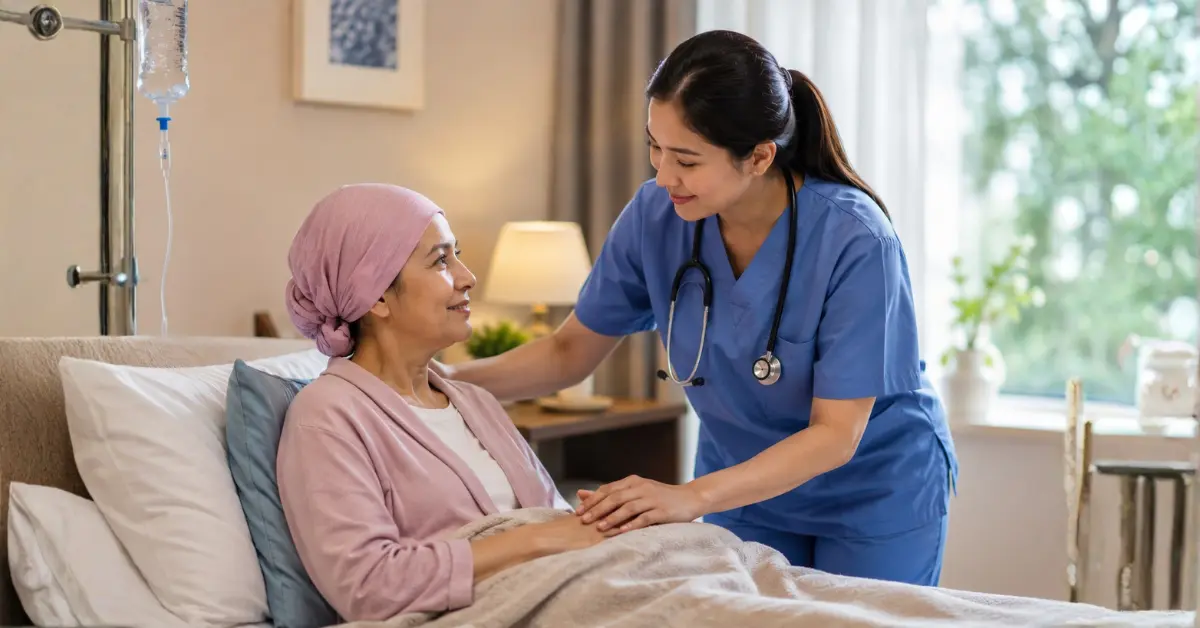
Caring for someone with cancer at home is both an act of love and a serious responsibility. Modern treatment means many patients now recover, rest, or continue therapy outside the hospital. But home care also brings a new challenge: managing side effects without panic.
This guide explains how to support cancer patients at home in a calm, practical, and safe way while understanding what is normal, what needs attention, and how to create stability during an emotionally difficult time.
Understanding Home Care in Cancer Treatment
Home care for cancer patients is not about replacing hospital treatment. It is about extending medical care into a more comfortable environment while maintaining safety.
Patients may be at home during:
- Chemotherapy cycles
- Radiation recovery
- Post-surgery healing
- Palliative or supportive care
The goal is to improve quality of life, reduce stress, and manage side effects early before they become emergencies.
The Emotional First Step: Reducing Panic
One of the biggest challenges in home care is not physical symptoms; it is fear.
Families often panic when they see:
- sudden fatigue
- nausea
- loss of appetite
- fever fluctuations
- mood changes
But many of these are expected side effects of treatment.
The key is to replace panic with a simple mindset:
“Observe, record, and respond, not react emotionally.”
Keeping a symptom diary helps track what is normal for the patient and what is changing over time.
Managing Common Side Effects at Home
1. Fatigue (The Most Common Symptom)
Cancer-related fatigue is not ordinary tiredness. Rest alone may not fix it.
What helps:
- Short, frequent rest periods instead of long naps
- Light movement, like slow walking, if possible
- Balanced meals with protein and complex carbs
- Gentle daily routine (avoid over-scheduling)
Avoid forcing activity. Energy should be preserved, not pushed.
2. Nausea and Vomiting
Often linked to chemotherapy or medications.
Home care strategies:
- Small, frequent meals instead of heavy ones
- Bland foods like rice, toast, and bananas
- Ginger tea or ginger-based foods (if approved by doctor)
- Avoid strong smells during cooking
- Keep hydration steady with small sips of fluids
If vomiting becomes persistent or the patient cannot keep fluids down, medical advice is necessary.
3. Loss of Appetite
This is emotionally difficult for families because eating feels like “strength.”
Helpful approaches:
- Serve favourite foods in small portions
- Do not pressure eating schedules strictly
- Focus on calorie-rich small bites (soups, smoothies, eggs, yogurt)
- Make meals visually appealing and calm
The goal is nourishment, not quantity.
4. Weak Immunity and Infection Risk
Cancer treatments can reduce immunity.
Important home precautions:
- Wash your hands frequently
- Keep the environment clean but not overly sterilized
- Avoid sick visitors
- Monitor temperature regularly
- Ensure food is freshly prepared and safe
Even minor infections should be taken seriously.
5. Pain Management
Pain is one of the most misunderstood symptoms at home.
What helps:
- Follow prescribed pain medications strictly
- Do not wait for pain to become severe before giving relief
- Use positioning support (pillows, adjustable seating)
- Gentle massage only if approved by a healthcare provider
Pain should never be “endured” silently.
Building a Safe Home Care Environment
A supportive environment can significantly improve comfort and recovery.
Physical setup:
- Clean, well-ventilated room
- Easy access to the bathroom
- Comfortable bed with proper support
- Soft lighting to reduce stress
Emotional environment:
- Calm communication
- Avoid discussing fear in front of the patient
- Encourage normal conversations (not only illness-focused talk)
- Respect moments of silence and rest
The Caregiver’s Role: Staying Calm Under Pressure
Caregivers often experience burnout faster than patients experience symptoms.
To stay balanced:
- Take short breaks without guilt
- Share responsibility with family members
- Keep emergency numbers ready
- Learn basic symptom recognition
- Do not self-medicate the patient without guidance
A calm caregiver creates a stable healing environment.
Warning Signs That Need Immediate Medical Attention
Not every symptom is an emergency, but some require quick response:
- Persistent high fever
- Severe uncontrolled vomiting
- Difficulty breathing
- Sudden confusion or unusual behavior
- Uncontrolled bleeding
- Extreme weakness or collapse
When in doubt, it is always safer to contact a healthcare professional.
The Role of Routine in Recovery
Cancer care at home becomes easier with structure.
A simple daily routine may include:
- Medication schedule
- Light movement or physiotherapy (if advised)
- Meal timings (flexible but consistent)
- Rest periods
- Emotional check-ins
Routine reduces uncertainty, which reduces panic.
Emotional Support: The Invisible Medicine
Cancer affects mental health deeply. Patients may feel:
- fear of the future
- frustration
- sadness or withdrawal
- sensitivity to small changes
Support does not always mean speaking. Sometimes it means:
- sitting quietly together
- listening without correcting emotions
- maintaining normalcy
- showing presence, not pressure
Psychological comfort directly impacts physical recovery.
Final Thoughts
Home care for cancer patients is a balance between medical awareness and emotional strength. Managing side effects without panic does not mean ignoring symptoms; it means responding with clarity instead of fear.
When families understand what to expect, build routines, and stay emotionally grounded, home becomes more than a place of care. It becomes a place of stability, dignity, and healing.
Author
-

Shanta Chaudhary is a DHA-licensed registered nurse based in Dubai, currently delivering compassionate and professional home nursing services with JPR Home Health Care. She is dedicated to providing personalized care that supports patients’ recovery and wellbeing in the comfort of their own homes.
Originally from Nepal, Shanta graduated from Hamro School of Nursing in Biratnagar in 2019. Since joining JPR Home Health Care in June 2025, she has been actively involved in a variety of home care services including medication management, wound care, vital signs monitoring, and assisting with daily living activities.
Her attentive and patient-centered approach helps ease the challenges faced by patients recovering from surgery, managing chronic conditions, or requiring ongoing nursing support. Shanta ensures each care plan is followed meticulously, prioritizing safety, hygiene, and comfort in every visit.
By adhering to DHA guidelines and best practices, Shanta consistently provides reliable, high-quality nursing care that promotes healing and independence at home.
DHA License
License Number: 07586284-001
DHA Profile: https://services.dha.gov.ae/sheryan/wps/portal/home/medical-directory/professional-details?dhaUniqueId=07586284
