


© 2026 All rights reserved |

Our physiotherapy at home service offers a comprehensive range of physical therapy and rehabilitation services delivered by a multi-disciplinary team of physiotherapy specialists working alongside supervising doctors and nurses.
DHA-Licensed Therapists | Home Service Across Dubai | 50+ Conditions Treated | 7 Days Availability
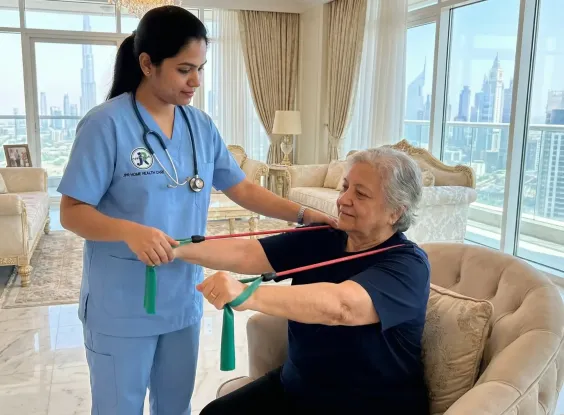
Getting to a clinic three times a week is not realistic for everyone recovering from surgery, managing a stroke, or simply dealing with a stubborn shoulder. Our home physiotherapy service brings the clinic to the patient instead, with a team that works alongside supervising doctors and nurses so treatment stays connected to the bigger clinical picture.
Physiotherapy does more than ease a sprained ankle. Used consistently, it slows the progress of chronic disease, rebuilds strength after long hospital stays, and gives people back the small daily movements that independence is built on.
Every plan starts from the person, not a template. Depending on what the assessment shows, a session might involve manual joint mobilization, therapeutic ultrasound, electrical stimulation, resistance training with weights, or vibration therapy to improve circulation and muscle response.
WHAT WE TREAT
From a sore knee to complex neurological recovery, our physiotherapists tailor each visit to where the patient is right now, not a generic protocol.
Hands-on techniques and targeted exercise to bring lasting relief for back, neck, joint and muscular pain.
Sessions combine manual therapy, stretching protocols and modalities like ultrasound or electrical stimulation to calm inflammation and correct the movement patterns that keep pain coming back. Patients dealing with chronic lower back pain, sciatica, arthritis flare-ups or persistent neck stiffness are seen regularly by the same therapist so progress is tracked properly.
Movement screening and corrective exercise for people at higher risk of strains, falls or repetitive stress injuries.
A physiotherapist looks at posture, joint alignment and muscle imbalances before they turn into an actual injury. This is especially useful for older adults at risk of falling, office workers with poor desk posture, and anyone returning to activity after a long period of inactivity.
Structured rehabilitation following orthopedic, cardiac or general surgery, started as early as it's safe to do so.
Post-operative therapy works best when it begins promptly and progresses in careful stages. Our therapists coordinate with the operating surgeon's guidelines to rebuild range of motion, strength and confidence after knee replacements, hip surgery, spinal procedures and other operations, without putting healing tissue at risk.
Ongoing physical therapy for diabetes, arthritis, osteoporosis and other long-term conditions that affect mobility.
Chronic conditions rarely respond to a single course of treatment. Our physiotherapists build long-term exercise programs that adapt as the patient's condition changes, helping manage joint degeneration, protect bone density, and keep blood sugar and cardiovascular markers moving in the right direction through safe, supervised activity.
Rehabilitation for stroke, Parkinson's, multiple sclerosis and other conditions affecting movement and coordination.
Neurological recovery is often slow and needs a therapist who understands how to read small changes in tone, coordination and strength. Sessions focus on functional tasks such as standing, transferring and walking safely, alongside exercises that support the nervous system's own ability to relearn movement.
Breathing exercises and chest clearance techniques for COPD, post-pneumonia recovery and reduced lung capacity.
Techniques such as controlled breathing drills, postural drainage and airway clearance help patients with chronic lung disease or post-infection weakness breathe more easily and stay active without becoming quickly fatigued.
Strength, flexibility and movement-efficiency work for athletes and active individuals wanting to train smarter.
Whether returning from a sports injury or looking to fix a movement inefficiency before it causes one, our therapists design conditioning programs that build strength where it's needed and correct the mechanics that limit performance.
Fall-prevention exercises and gait correction for elderly patients or anyone with unsteady movement.
A fall at home can undo months of recovery. Balance-focused sessions strengthen stabilizing muscles, sharpen reaction time and rebuild confidence in walking, standing and turning, particularly important for elderly patients living alone.PHYSIOTHERAPY PACKAGES & RATES
Free Doctor Assessment Before Your First Session
A 5% VAT will be charged in addition to the listed prices.
CONDITION BY CONDITION
A closer look at how a home physiotherapy visit actually helps, condition by condition. If yours isn’t listed, call us and we’ll tell you honestly whether we can help.
Manual therapy loosens tight paraspinal muscles while core-strengthening exercises rebuild the support your spine relies on. Over several sessions, physiotherapy also corrects the posture habits that let the pain return.
Nerve gliding techniques and targeted stretches ease the pressure a compressed sciatic nerve puts on the leg. Physiotherapy also strengthens the hip and lower back muscles that keep the nerve pathway clear going forward.
Progressive stretching and joint mobilization gradually widen the shoulder’s range of motion stage by stage. Physiotherapy paces this carefully, since pushing too fast on a frozen shoulder usually sets recovery back.
Strengthening exercises rebuild the small stabilizing muscles around the shoulder joint that took the initial strain. Physiotherapy also corrects the arm movements that caused the injury, so it doesn’t happen again.
Eccentric strengthening exercises reload the forearm tendon in a way that encourages it to heal and thicken. Manual therapy and activity modification reduce the repetitive strain that triggered the condition.
Nerve gliding exercises and wrist mobilization ease pressure on the median nerve as it passes through the wrist. Physiotherapy also addresses hand and forearm posture during daily tasks that aggravate symptoms.
Gentle joint mobilization restores movement in stiff neck segments without forcing the spine. Postural retraining then teaches the neck and shoulders to carry less strain during the day.
Low-impact strengthening around the joint reduces the load on worn cartilage and eases daily pain. Physiotherapy keeps the joint moving through a safe range, which slows further stiffness better than rest does.
Early physiotherapy after surgery restores bending and straightening in the new joint before scar tissue can limit it. Structured strengthening then rebuilds the leg muscles needed to walk, climb stairs and stand from a chair independently.
Guided walking and hip-strengthening exercises help the new joint bear weight safely from the first days after surgery. Physiotherapy also teaches safe movement patterns that protect the hip while it fully heals.
Physiotherapy rebuilds quadriceps and hamstring strength in the sequence the healing graft can safely tolerate. Balance and agility drills are added later, once the knee is stable enough for a return to sport.
Range-of-motion exercises protect the healing meniscus while restoring normal knee movement. Strengthening then follows a staged plan so the joint regains stability without overloading the repair too soon.
Physiotherapy focuses on safe movement and posture in the months after fusion, protecting the healing vertebrae. Core-stabilizing exercises are introduced gradually to support the spine once the surgeon clears further activity.
Controlled, progressive loading through physiotherapy helps a repaired tendon regain strength without re-tearing. Scar tissue mobilization alongside this also keeps the area from becoming stiff as it heals.
Physiotherapy follows a strict post-operative protocol, protecting the repaired tendon while slowly reintroducing shoulder movement. Strength work is added only once the tissue has healed enough to handle it safely.
After a cast comes off, physiotherapy restores the joint stiffness and muscle weakness that build up during immobilization. Gentle loading exercises rebuild bone-supporting strength without stressing the healing fracture site.
Physiotherapy retrains the weaker side of the body through repetitive, task-specific movement that encourages the brain to rebuild lost pathways. Sessions also work on balance and walking, the two skills most linked to regaining independence at home.
Physiotherapy exercises target the slowed movement, shuffling gait and balance issues that come with Parkinson’s, often using rhythm and visual cues to help movement flow more naturally. Regular sessions also help maintain flexibility as rigidity tends to increase over time.
Physiotherapy manages the fatigue, weakness and coordination changes that flare and settle with MS through carefully paced exercise. Therapists adjust intensity session to session, since overexertion can temporarily worsen Multiple Sclerosis symptoms.
Physiotherapy works on whatever movement remains below the level of injury, along with the upper body strength needed for transfers and daily tasks. Breathing exercises are often included too, since spinal injuries can affect chest muscles.
Physiotherapy addresses the balance, coordination and motor planning difficulties that follow a brain injury through structured, repeated practice. Sessions are adapted continuously, since recovery is rarely a straight line after a TBI.
Facial exercises and soft tissue techniques in physiotherapy encourage symmetrical muscle activity as nerve function returns. Early, gentle treatment also helps prevent the facial stiffness that can develop if the muscles go unused.
Balance and strengthening exercises in physiotherapy help compensate for the reduced sensation neuropathy causes in the feet and legs. Therapists also teach safer walking patterns to lower the risk of falls.
Physiotherapy rebuilds strength gradually as the nerves recover, starting with light resistance and progressing as tolerated. Breathing exercises are also included when the condition has affected respiratory muscles.
Physiotherapy improves circulation and joint mobility that diabetes can gradually reduce, particularly in the feet and legs. Structured activity also supports better blood sugar control alongside medical management.
Weight-bearing and resistance exercises in physiotherapy help slow bone density loss and strengthen the muscles that protect fragile bones. Balance training is included too, since a fall is often the real danger with osteoporosis rather than the condition itself.
Physiotherapy keeps joints moving through gentle range-of-motion exercise during flare-ups and builds strength around them between flares. This combination helps limit the joint deformity that untreated rheumatoid arthritis can cause over time.
Low-impact, graded exercise through physiotherapy helps reduce the widespread pain and fatigue fibromyalgia causes without overloading sensitive muscles. Therapists pace the program carefully, since pushing too hard can trigger a flare.
Physiotherapy uses very gradual activity pacing to rebuild tolerance for movement without triggering post-exertional crashes. Sessions focus as much on energy management as on physical exercise itself.
Physiotherapy strengthens the muscles supporting the knees, hips and lower back that carry extra load from excess weight. Low-impact exercise options also let patients stay active while protecting joints from further strain.
Physiotherapy rebuilds physical tolerance gradually after heart surgery, closely monitoring heart rate and exertion as activity increases. Breathing exercises also help clear the chest and prevent complications common after open-heart procedures.
Supervised walking programs through physiotherapy improve circulation and increase the distance patients can walk before leg pain sets in. Exercise progression is carefully paced to build tolerance without overexertion.
Physiotherapy reintroduces structured aerobic and strength exercise at a pace that’s safe for blood pressure control. Regular monitored activity also supports the broader management plan set by the treating physician.
Physiotherapy guides patients back into physical activity in carefully monitored stages after a heart attack, tracking heart rate and symptoms throughout. This structured approach rebuilds confidence and cardiovascular fitness without unnecessary risk.
Physiotherapy restores ankle stability through balance drills and progressive strengthening once initial swelling has settled. This reduces the high chance of re-spraining the same ankle that comes with skipping proper rehabilitation.
Physiotherapy reintroduces movement through carefully staged stretching and eccentric strengthening as the muscle heals. Returning to sport too early is the most common cause of repeat hamstring injuries, so pacing is closely managed.
Physiotherapy addresses the biomechanics, often related to foot posture or training load, that cause shin splints in the first place. Strengthening the lower leg alongside activity modification lets athletes return to running without symptoms returning.
Stretching and manual therapy in physiotherapy reduce tension in the plantar fascia and surrounding calf muscles. Strengthening exercises are added to correct the foot mechanics that often cause the condition to recur.
Physiotherapy releases tightness along the iliotibial band and strengthens the hip muscles that control its tension during movement. Correcting running or walking mechanics is usually part of the plan, since poor hip control is often the underlying cause.
Specific physiotherapy exercises retrain the balance system to compensate for vestibular dysfunction, reducing dizziness over a series of sessions. Gaze stabilization and positional exercises are tailored to the exact type of vertigo involved.
Physiotherapy assesses walking pattern and balance to identify what’s putting a patient at risk of falling. Targeted strengthening and gait retraining then rebuild the stability needed to move around the home safely.
Resistance-based physiotherapy exercises directly target the muscle loss that comes with age, an intervention shown to work better than rest. Regular sessions preserve the strength needed for everyday tasks like rising from a chair or climbing stairs.
Physiotherapy rebuilds walking ability and confidence after a hip fracture, starting with supported movement and progressing to independent mobility. Strengthening the surrounding muscles also helps protect against a second fracture.
Physiotherapy reverses the muscle weakness and reduced stamina that even a short hospital stay can cause, especially in older patients. A graded return to activity rebuilds strength and confidence before it turns into a longer-term mobility problem.
MEET THE TEAM
Ms. Fathima Fidha Paliyil is a DHA-licensed Physiotherapist with over four years of combined clinical and internship experience across neurological, orthopedic, pediatric, sports, and rehabilitation settings. She specializes in personalized rehabilitation programs focused on restoring mobility, reducing pain, improving functional independence, and supporting post-operative recovery. Her clinical approach combines manual therapy, therapeutic exercises, mobility training, patient education, and evidence-based rehabilitation techniques. She is experienced in treating patients of different age groups and is committed to delivering compassionate, patient-centered care while maintaining high professional and DHA standards.

Call our customer service line on +971 50 873 8150
Tell us a bit about your patient's health condition.
Get the best physiotherapy service in Dubai
Our licensed and experienced physiotherapists are available near you in Dubai. No matter where you are, our home care service staff will reach you! In your hotel in Dubai or at home. Our phone line is open 24/7 for all your inquiries and support requests.
WHY HOME PHYSIOTHERAPY
Our physiotherapy. Your schedule. Sessions are built around you, with room to adjust or reschedule whenever life gets in the way.
Every therapist on our team is licensed by the Dubai Health Authority and trained to deliver clinical-grade care outside a hospital setting.
No waiting rooms, no travel time. Treatment happens in a space where the patient already feels comfortable.
Plans are built around the patient's specific condition and goals, not a fixed clinic routine.
Home physiotherapy is priced to stay accessible, with packages available for longer treatment programs.
Manual therapy, electrotherapy, ultrasound, vibration therapy and exercise-based rehabilitation, all under one service.
Book in advance or make last-minute changes; our coordination team works around your day, not the reverse.
BOOK NOW
Fill in a few details and our coordination team will call you back to confirm the first available slot for a home physiotherapy visit anywhere in Dubai.
COMMON QUESTIONS
It’s hands-on physical therapy delivered by a licensed physiotherapist who visits the patient at home rather than the patient traveling to a clinic. The therapist assesses, treats and tracks progress on-site, using the same techniques and equipment found in a clinical setting.
Yes. Back pain is one of the most common reasons people book a home session, and treatment usually combines manual therapy with exercises aimed at the root cause rather than just the symptoms.
Cost depends on the condition being treated, how often sessions are needed and the overall length of the program. Call our team and we’ll give you a clear quote before anything is booked.
Manual therapy, therapeutic exercise, electrical stimulation, ultrasound, vibration therapy, post-surgical rehabilitation, neurological rehabilitation, respiratory physiotherapy and balance training are all available, matched to the patient’s condition.
Yes, Coverage depends on your individual insurance policy. For more details and assistance with the required documentation, please contact us directly. We’ll be happy to help.
Definitely. We regularly treat elderly patients for balance, post-fall recovery, arthritis and general mobility, with therapists trained to work gently and patiently with older adults.
Our physiotherapists are DHA-licensed and have hands-on clinical experience treating a wide range of conditions, from post-surgical recovery to neurological rehabilitation.
READY TO START TREATMENT?
Recovery moves faster with a consistent therapist and a comfortable setting. Call or message us and we’ll take it from there.
© 2026 All rights reserved |