

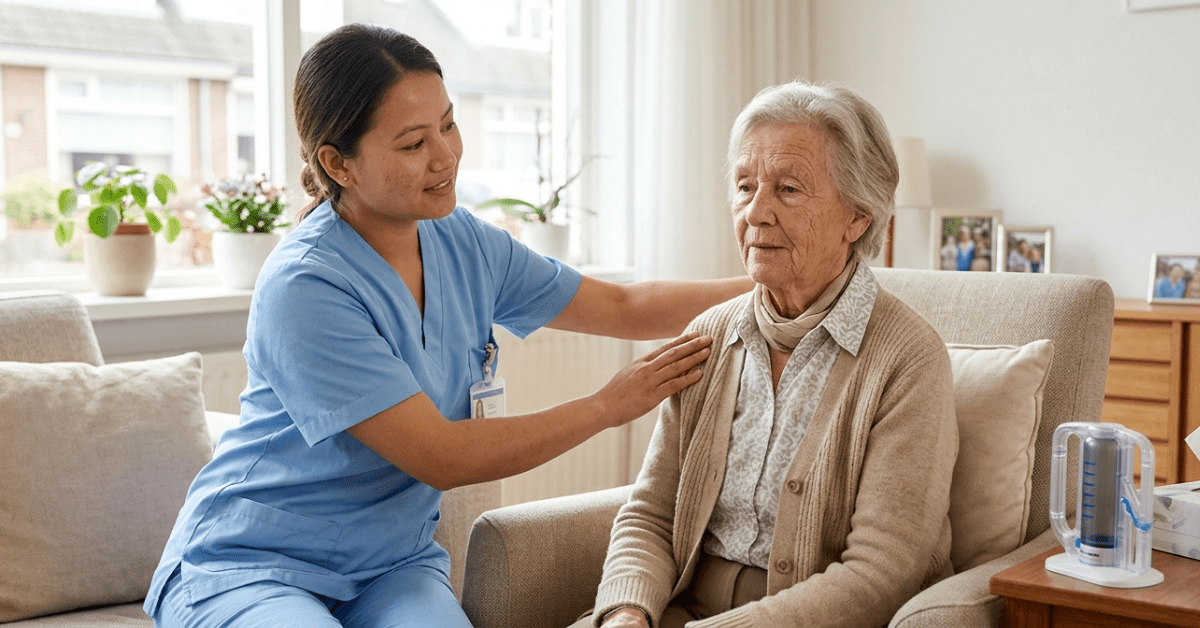
Caring for elderly loved ones at home requires more than basic support, especially when they are at risk of respiratory complications such as atelectasis and pneumonia. These conditions are common among seniors with limited mobility, chronic illness, or neurological conditions like spinal cord injuries. Professional nurses play a critical role in preventing these complications through consistent, evidence-based care that focuses on airway management, lung expansion, and infection control.
Atelectasis occurs when parts of the lung collapse due to shallow breathing or mucus obstruction, while pneumonia is an infection that can develop when secretions accumulate and bacteria grow in the lungs. Both conditions can significantly impact an elderly patient’s quality of life and may lead to hospitalization if not properly managed. This is why skilled nursing care at home is essential.
One of the most important interventions nurses provide is airway clearance management. Many elderly patients, especially those who are bedridden or have weakened respiratory muscles, cannot cough effectively. Nurses assist with cough augmentation techniques, which may include manual assisted coughing or the use of mechanical devices that simulate a strong cough. This helps clear mucus from the airways and prevents buildup that can lead to infection.
In addition, nurses frequently guide patients through deep breathing exercises. Techniques such as incentive spirometry encourage patients to take slow, deep breaths, which helps expand the lungs and prevent collapse. These exercises are especially important after surgery, during prolonged bed rest, or in patients with reduced mobility. Regular breathing exercises improve oxygenation and reduce the risk of atelectasis.
Positioning and mobility support are also key components of respiratory care. Professional nurses ensure that patients are repositioned regularly, typically every two hours, to promote lung expansion and prevent fluid accumulation in the lungs. Even small movements, such as sitting upright or transferring to a chair, can significantly improve breathing. For patients who cannot move independently, nurses provide safe transfer assistance and passive range-of-motion exercises to stimulate circulation and lung function.
Another critical aspect of care is secretion management. Nurses monitor the consistency and volume of mucus and may administer nebulized treatments, such as bronchodilators, to open airways and make it easier to clear secretions. In some cases, humidification therapy is used to prevent dryness and keep mucus thin. Proper hydration is also encouraged, as it plays a vital role in maintaining healthy respiratory function.
Professional nurses are also trained to identify early warning signs of respiratory complications. They monitor vital signs, oxygen saturation levels, and changes in breathing patterns. Symptoms such as increased respiratory rate, fever, confusion, or reduced oxygen levels can संकेत early pneumonia. Early detection allows for timely medical intervention, which can prevent severe complications.
Infection prevention is another major focus. Nurses follow strict hygiene protocols, including hand hygiene and proper handling of respiratory equipment. For patients with feeding difficulties or swallowing disorders, nurses take precautions to prevent aspiration, which is a leading cause of pneumonia in the elderly. This may include positioning the patient upright during meals and using modified diets.
For patients with chronic conditions or spinal cord injuries, nighttime respiratory support such as CPAP or BiPAP may be used to maintain adequate ventilation. Nurses ensure that these devices are used correctly and consistently, improving overall lung function and reducing the risk of complications.
Ultimately, professional elderly care at home provides a comprehensive approach to respiratory health. Through proactive interventions, continuous monitoring, and personalized care, nurses help prevent atelectasis and pneumonia, allowing elderly patients to remain safe, comfortable, and independent in their own homes.
Author
-

Sony Thapa is a DHA-licensed registered nurse in Dubai, currently serving as a dedicated home care nurse with JPR Home Health Care. She specializes in elderly care, offering compassionate, respectful, and patient-centered nursing support to seniors in the comfort of their homes.
Originally from Nepal, Sony completed her Diploma in Nursing in Kathmandu in 2016. With nearly a decade of hands-on experience and a strong grounding in geriatric care, she joined JPR Home Health Care in March 2025 and quickly became a trusted presence among families seeking dependable care for aging loved ones.
Sony’s expertise includes assisting with daily living activities, chronic disease monitoring, post-hospital rehabilitation, medication management, and fall prevention. Her calm demeanor and gentle communication style make her especially effective with seniors who may be coping with dementia, mobility challenges, or emotional vulnerability.
She follows strict DHA guidelines while bringing a deeply human touch to every patient interaction, always ensuring safety, hygiene, and dignity come first. For families navigating the complexities of elderly care at home, Sony provides both peace of mind and professional excellence.
DHA License
License Number: 98504622-001
DHA Profile: https://services.dha.gov.ae/sheryan/wps/portal/home/medical-directory/professional-details?dhaUniqueId=98504622
