

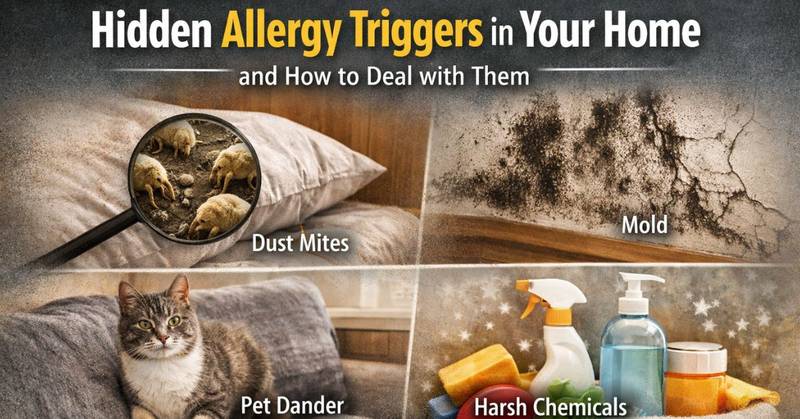
Have you ever noticed that your sneezing, itchy eyes, or runny nose seem worse when you’re at home rather than outside? Many people assume allergies only come from pollen or outdoor pollution. But surprisingly, some of the most persistent allergy triggers are hiding inside our homes, often in places we rarely think about.
According to experts at the Mayo Clinic and the Cleveland Clinic, indoor allergens such as dust mites, mold, pet dander, and chemical irritants are among the most common causes of ongoing allergy symptoms. The good news is that once you recognize these triggers, simple changes at home can significantly reduce discomfort.
Let’s explore some of the most common hidden allergy triggers in homes and practical ways to manage them.
1. Dust Mites in Bedding and Furniture
Dust mites are microscopic organisms that thrive in warm, humid environments, especially in mattresses, pillows, carpets, and upholstered furniture. The World Health Organization (WHO) notes that dust mite allergens are one of the leading causes of indoor allergies and asthma.
Because dust mites are invisible to the naked eye, many people don’t realize they’re present. Symptoms often include sneezing, nasal congestion, and itchy skin.
What you can do:
- Wash bed sheets and pillowcases weekly in hot water.
- Use dust-proof mattress and pillow covers.
- Vacuum carpets and furniture using HEPA-filter vacuums.
- Reduce indoor humidity levels when possible.
- These small adjustments can make a noticeable difference in controlling indoor allergens.
2. Mold in Damp Areas
Bathrooms, kitchens, basements, and poorly ventilated rooms can easily become breeding grounds for mold. Mold releases tiny spores into the air, which may trigger allergic reactions such as coughing, wheezing, or throat irritation.
The Cleveland Clinic reports that individuals with respiratory sensitivities may experience stronger symptoms when exposed to mold spores indoors.
Prevention tips:
- Ensure good ventilation in bathrooms and kitchens.
- Fix leaking pipes or damp walls quickly.
- Use dehumidifiers in humid areas.
- Clean mold spots promptly using safe cleaning solutions.
- Keeping moisture under control is one of the most effective ways to prevent mold-related allergies.
3. Pet Dander
Pets bring joy and companionship into our homes, but they can also introduce allergens. Pet dander, tiny flakes of skin shed by animals, can remain airborne for long periods and settle on furniture, carpets, and bedding. Even homes with very clean pets may still have allergen buildup.
Helpful strategies include:
- Grooming pets regularly.
- Keeping pets out of bedrooms.
- Using air purifiers with HEPA filters.
- Cleaning floors and upholstery frequently.
- For individuals with stronger allergies, professional guidance may help determine the safest ways to manage symptoms at home.
4. Cleaning Products and Fragrances
Ironically, some cleaning products meant to make homes healthier can actually trigger allergic reactions. Strong chemicals, air fresheners, and scented detergents may irritate the respiratory system.
Medical sources such as the American Academy of Allergy, Asthma & Immunology explain that chemical irritants can worsen allergy symptoms and sometimes mimic allergic reactions.
Safer alternatives include:
- Using fragrance-free cleaning products.
- Choosing mild or natural cleaners when possible.
- Avoiding excessive use of room sprays or scented candles.
- Ensuring good airflow during cleaning.
- These changes help reduce unnecessary exposure to irritants.
5. Indoor Air Quality and Dust Accumulation
Poor air circulation allows allergens to accumulate indoors. Air conditioners and ventilation systems may also collect dust and distribute particles throughout the house if not properly maintained.
Simple steps can significantly improve indoor air quality:
- Replace air filters regularly.
- Keep air vents clean and unobstructed.
- Open windows occasionally to improve ventilation.
- Use air purifiers in rooms where allergy symptoms are strongest.
Maintaining clean air indoors is especially important for children, seniors, and individuals with respiratory conditions.
When Professional Support May Help
For some individuals, particularly elderly patients or those with chronic respiratory issues, managing allergies can require medical supervision. Persistent symptoms such as breathing difficulty, chronic coughing, or skin reactions should always be evaluated by a healthcare professional.
In these situations, home health care services in Dubai can provide valuable support. Trained professionals can assist with health monitoring, medication management, and environmental recommendations to help reduce allergy triggers within the home.
Many families also rely on home health care Dubai services when caring for elderly relatives or patients recovering from illness, as managing indoor allergens becomes an important part of maintaining overall health.
Professional home health care services in Dubai may include guidance on maintaining a healthier indoor environment while ensuring patients receive proper care and monitoring.
A Healthier Home Starts with Awareness
Allergy triggers are often subtle, hidden in everyday household environments. Dust mites in bedding, mold in damp corners, pet dander, and chemical irritants may quietly contribute to persistent symptoms.
The key is awareness. Once you identify potential triggers, small adjustments, better cleaning habits, improved ventilation, and careful product choices can greatly improve indoor comfort.
If symptoms persist despite these changes, consulting a healthcare professional or seeking guidance from home health care Dubai providers may help identify deeper causes and develop a personalized management plan.
In the end, a healthier home environment doesn’t require drastic changes, just thoughtful attention to the spaces where we live, breathe, and rest. Even simple steps today can lead to clearer breathing and better well-being tomorrow.
Author
-

Shanta Chaudhary is a DHA-licensed registered nurse based in Dubai, currently delivering compassionate and professional home nursing services with JPR Home Health Care. She is dedicated to providing personalized care that supports patients’ recovery and wellbeing in the comfort of their own homes.
Originally from Nepal, Shanta graduated from Hamro School of Nursing in Biratnagar in 2019. Since joining JPR Home Health Care in June 2025, she has been actively involved in a variety of home care services including medication management, wound care, vital signs monitoring, and assisting with daily living activities.
Her attentive and patient-centered approach helps ease the challenges faced by patients recovering from surgery, managing chronic conditions, or requiring ongoing nursing support. Shanta ensures each care plan is followed meticulously, prioritizing safety, hygiene, and comfort in every visit.
By adhering to DHA guidelines and best practices, Shanta consistently provides reliable, high-quality nursing care that promotes healing and independence at home.
DHA License
License Number: 07586284-001
DHA Profile: https://services.dha.gov.ae/sheryan/wps/portal/home/medical-directory/professional-details?dhaUniqueId=07586284
