
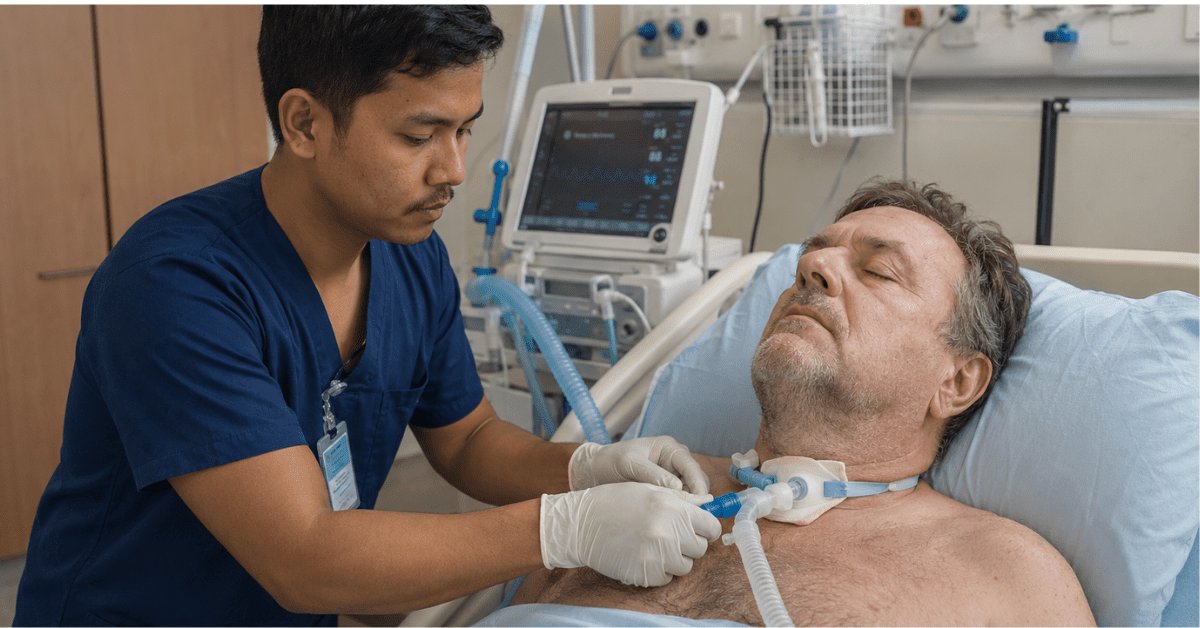
When a loved one requires mechanical ventilation, bringing them home can feel both reassuring and overwhelming. Home can provide a more comfortable and familiar environment, but caring for someone who depends on a ventilator requires careful preparation, regular monitoring, and support from trained healthcare professionals.
A ventilator is a medical device that helps a person breathe when their lungs or respiratory muscles are unable to provide adequate breathing on their own. Depending on the person’s condition, ventilator support may be needed temporarily during recovery or for a longer period because of a chronic respiratory condition.
For families, understanding the basics of ventilator support can make home care less stressful and help them recognize when their loved one needs professional medical attention.
What Is Mechanical Ventilation?
Mechanical ventilation is a form of breathing support provided by a machine.
The ventilator helps move air into and out of the lungs, supporting oxygen delivery and the removal of carbon dioxide. It may be used when a person has severe respiratory problems, neurological conditions affecting breathing, muscle weakness, or other medical conditions that make independent breathing difficult.
A person receiving ventilator support may have a breathing tube placed through the mouth or nose in a hospital setting. For people who require longer-term ventilation, a tracheostomy tube may sometimes be used to provide a more stable airway.
The exact type of ventilator and airway depends on the individual’s medical condition and treatment plan.
Why Might Someone Need a Ventilator at Home?
Home mechanical ventilation may be considered when a person continues to require respiratory support after their hospital treatment.
Some people may need ventilation because of:
- Chronic respiratory diseases
- Neuromuscular disorders
- Spinal cord injuries
- Certain neurological conditions
- Severe weakness of the respiratory muscles
- Long-term breathing difficulties
- Complications following serious illness
- Conditions affecting the ability to maintain adequate oxygen or remove carbon dioxide
Before a person is discharged from the hospital with ventilator support, the healthcare team generally evaluates whether the home environment, caregivers, equipment, and support system are appropriate.
What Does a Ventilator Do?
A ventilator provides breaths or breathing assistance according to settings prescribed by the patient’s healthcare team.
Families may hear terms such as tidal volume, respiratory rate, FiO₂, and PEEP when discussing ventilator care.
These terms can sound complicated, but families do not necessarily need to adjust these settings themselves.
Respiratory Rate
This refers to the number of breaths the ventilator is programmed to provide within a minute.
Tidal Volume
Tidal volume refers to the amount of air delivered during each ventilator breath in modes where a set volume is used.
FiO₂
FiO₂ refers to the concentration of oxygen being delivered by the ventilator.
Room air contains approximately 21% oxygen, while a ventilator can provide a different oxygen concentration when prescribed.
PEEP
PEEP, or positive end-expiratory pressure, helps keep the air sacs in the lungs open at the end of exhalation.
Important: Family caregivers should not independently change ventilator settings unless they have been specifically trained and authorized to do so by the patient’s healthcare team.
Understanding Ventilator Alarms at Home
One of the most stressful experiences for a family can be hearing the ventilator alarm.
An alarm does not automatically mean that something catastrophic has happened. It means that the ventilator has detected a condition that needs attention.
The most important rule is:
Never simply silence an alarm and walk away. Check your loved one and determine why the alarm occurred.
Low-Pressure Alarms
A low-pressure alarm may occur when the ventilator detects that pressure in the breathing circuit is lower than expected.
Possible causes can include:
- A disconnected tube
- A leak in the breathing circuit
- A cuff leak
- Displacement of the airway tube
- A loose connection
Families should follow the emergency instructions provided by the hospital or home healthcare team.
High-Pressure Alarms
A high-pressure alarm can occur when the ventilator encounters increased resistance while delivering air.
Possible causes include:
- Thick or excessive respiratory secretions
- Coughing
- Bronchospasm
- Biting the breathing tube
- Kinked ventilator tubing
- An obstruction in the airway
- Certain changes in the lungs, including conditions that can increase airway pressure
A high-pressure alarm should never be ignored, particularly if the person appears distressed or their breathing or oxygen level has changed.
What Should a Family Do When an Alarm Sounds?
When an alarm occurs, try to remain calm.
Start by looking at your loved one rather than focusing only on the ventilator.
Look for signs such as:
- Difficulty breathing
- Increased effort when breathing
- Sudden changes in alertness
- Bluish or greyish lips or skin
- Unusual agitation or confusion
- A significant change in oxygen saturation, if you have been instructed to monitor it
- Difficulty clearing secretions
- Unusual chest movement
- Sudden changes in the way the ventilator is functioning
Then check for obvious problems that you have been trained to identify, such as a disconnected circuit or visibly kinked tubing.
If the problem cannot be corrected quickly using the instructions provided by the healthcare team, or if your loved one is showing signs of respiratory distress, seek emergency medical assistance according to the emergency plan provided for their condition.
Why Regular Observation Is Important
A ventilator supports breathing, but it does not replace human observation.
Family members and caregivers should become familiar with what is normal for their loved one.
For example, you may learn:
- Their usual breathing pattern
- Their normal level of alertness
- Their usual oxygen saturation, if monitoring is prescribed
- Their typical amount and appearance of secretions
- How they normally cough
- How they usually respond to the ventilator
Knowing what is normal makes it easier to recognize when something has changed.
Managing Respiratory Secretions
People who require ventilator support may have difficulty clearing mucus and respiratory secretions.
Secretions can sometimes obstruct the airway or contribute to breathing difficulties.
Depending on the patient’s condition and care plan, the healthcare team may teach caregivers about:
- Suctioning
- Airway clearance techniques
- Humidification
- Positioning
- Recognizing changes in secretions
Family members should only perform suctioning or other airway procedures after receiving appropriate hands-on training from qualified healthcare professionals.
Changes such as unusually thick secretions, a sudden increase in secretions, blood in secretions, or a change in color or odor should be reported to the healthcare team.
Oral Care and Hygiene
Good oral hygiene remains important for people receiving ventilator support.
Depending on the patient’s condition, they may be unable to clean their mouth independently. Regular oral care can help maintain comfort and oral hygiene and may form part of the patient’s infection-prevention plan.
The home healthcare team can guide family caregivers on the appropriate oral-care routine for their loved one.
Protecting the Skin Around Medical Devices
A ventilator-dependent person may have several medical devices attached to their body for prolonged periods.
These can create pressure or friction against the skin.
Families and caregivers should regularly observe areas around:
- The airway or tracheostomy
- Tubing and securing devices
- Oxygen equipment
- Other medical devices
- Pressure points on the body
Redness, swelling, bleeding, drainage, skin breakdown, or a wound should be brought to the attention of the healthcare team.
The Importance of Positioning
Positioning can be an important part of respiratory and general comfort care.
Depending on the person’s medical condition, the healthcare team may recommend specific positions or repositioning schedules.
Regular repositioning may also help reduce pressure injury risk in people who spend long periods in bed.
Because certain positions may not be appropriate for every patient, families should follow the individualized instructions provided by their healthcare professionals.
How Home Nurses Can Support Ventilator-Dependent Patients
Caring for a ventilator-dependent loved one can be physically and emotionally demanding, particularly when family members are also managing work, household responsibilities, and other caregiving duties.
A trained home nurse can provide professional support within the patient’s care plan.
Depending on the patient’s needs and the scope of the service, home nursing support may include:
- Monitoring respiratory status
- Observing oxygen saturation and vital signs when prescribed
- Supporting airway and tracheostomy care
- Providing or assisting with suctioning when clinically indicated and authorized
- Monitoring secretions
- Providing medication-related care as prescribed
- Supporting personal hygiene
- Providing oral care
- Repositioning and pressure-area care
- Monitoring the patient’s response to ventilator support
- Recognizing changes that need medical attention
- Communicating important observations to the family and healthcare team
Having trained professional support can also give family members greater confidence while allowing them to spend more meaningful time with their loved one.
Keeping Emergency Equipment Available
A person dependent on mechanical ventilation should have the emergency equipment recommended by their healthcare team readily accessible.
Depending on the patient’s individual plan, this may include appropriate backup respiratory equipment, a manual resuscitation bag, suction equipment, spare supplies, and emergency airway equipment.
Families should know:
- Where each item is kept
- What each item is used for
- Which situations require its use
- Who should be contacted during an emergency
Caregivers should receive practical training before attempting emergency procedures.
Signs That Should Not Be Ignored
Changes in a ventilated patient’s condition can sometimes develop quickly.
Contact the patient’s healthcare team promptly if you notice concerning changes such as:
- Increasing difficulty breathing
- Persistent or worsening coughing
- A significant change in oxygen saturation
- Increasing or unusual respiratory secretions
- Blood in respiratory secretions
- Fever or other signs of infection
- Unusual sleepiness or difficulty waking
- New confusion or agitation
- Changes in skin or lip color
- Repeated ventilator alarms
- Problems with the airway or tubing
- A suspected displacement of the airway tube
- Sudden changes in the patient’s usual condition
If the person is experiencing severe breathing difficulty, becomes unresponsive, develops a significant change in skin color, or appears to be in immediate danger, follow the emergency plan provided by the treating medical team and seek emergency medical assistance immediately.
Preparing the Home for Ventilator Care
Before bringing a ventilator-dependent loved one home, families should work with the healthcare team to prepare the home environment.
Important considerations may include:
- A suitable bed and sleeping area
- Reliable electricity
- Backup power arrangements when recommended
- Space for ventilator and respiratory equipment
- Safe storage of medical supplies
- Adequate lighting
- Easy access to emergency equipment
- Appropriate infection-control practices
- Emergency contact information
- A clear plan for power failure or equipment malfunction
The home should be organized so that caregivers can reach essential equipment quickly when necessary.
Training Family Caregivers
Family members should not be expected to learn ventilator care simply by watching someone else.
Before discharge, caregivers should receive appropriate instruction from the healthcare team regarding the patient’s specific equipment and care needs.
Training may cover:
- Basic ventilator operation
- Understanding alarms
- Airway or tracheostomy care
- Suctioning, when required
- Recognizing respiratory distress
- Equipment troubleshooting
- Medication routines
- Infection prevention
- Emergency procedures
- When and whom to call for help
It is also helpful for more than one family member or caregiver to receive training so that one person does not carry the entire responsibility alone.
Emotional Support for the Family
Ventilator care is not only a medical responsibility. It can also be emotionally challenging.
Family members may experience fear, anxiety, exhaustion, or uncertainty, especially during the first few weeks at home.
It is important to recognize that needing professional help does not mean the family is failing to provide care. Home healthcare support can help families manage the practical aspects of care while allowing them to focus on their relationship with their loved one.
Frequently Asked Questions
Can someone on a ventilator live at home?
Yes. Some people who require long-term mechanical ventilation can receive care at home when their medical condition is stable and the appropriate equipment, caregiver support, training, and healthcare services are available.
Can family members operate a home ventilator?
Family caregivers may be trained to perform certain aspects of ventilator care, depending on the patient’s needs and the healthcare team’s instructions. They should not independently change prescribed ventilator settings or perform unfamiliar procedures without appropriate training.
Is a ventilator the same as an oxygen machine?
No. Oxygen therapy provides supplemental oxygen, while a mechanical ventilator provides breathing assistance. Some patients may require both, but they are different forms of respiratory support.
What happens if the ventilator stops working?
Families should follow the emergency and equipment-failure plan provided by the patient’s healthcare team. Backup equipment and emergency supplies should be available when recommended. If the patient is unable to breathe adequately without the ventilator or is showing signs of respiratory distress, emergency medical assistance may be required.
Does a ventilator mean the patient has to stay in bed?
Not necessarily. Mobility depends on the person’s medical condition, strength, airway, ventilator requirements, and rehabilitation plan. Some ventilator-dependent patients may be able to sit, stand, or participate in rehabilitation with appropriate professional support.
Caring for a loved one who requires mechanical ventilation at home can be challenging, but families do not have to manage every aspect alone.
Understanding what the ventilator does, recognizing common alarms, observing changes in breathing, maintaining a safe environment, and following the patient’s individualized care plan can help make home care safer and more organized.
Professional home nursing support can also provide an important layer of assistance for patients who require ongoing respiratory monitoring and specialized care.
Most importantly, families should remember that the ventilator is only one part of the care process. The patient’s comfort, breathing, safety, nutrition, hygiene, mobility, emotional well-being, and overall health all deserve attention.
With appropriate medical guidance, caregiver training, equipment, and professional support, home can become a safe and comfortable environment for a person who requires ongoing ventilator assistance.
Author
-

Mina Kumari BK is a DHA-licensed Registered Nurse at JPR Home Health Care, Dubai, with a strong focus on IV therapy and wellness-based nursing care. She specializes in delivering safe, effective IV drip treatments at home, supporting hydration, energy, and overall patient recovery.
Originally from Nepal and a graduate of Nobel College, Pokhara (2024), Mina brings hands-on experience in IV cannulation, infusion monitoring, and patient care. Since joining JPR, she has become a reliable choice for clients seeking professional in-home IV therapy with comfort and precision.
Her core competencies include:
Administration of IV drips for hydration, energy, and wellness support
Skilled IV cannulation and safe infusion monitoring
Patient assessment and vital signs monitoring before and during IV therapy
Post-treatment care and observation to ensure patient safety
General nursing care and recovery support in home settings
Mina is known for her gentle technique, attention to detail, and commitment to patient comfort, making her a trusted nurse for IV therapy services in Dubai.
DHA License
License Number: 64192972-001
