

Myasthenia gravis (MG) is an autoimmune condition that affects the communication between nerves and muscles, resulting in weakness of voluntary muscles. The weakness can affect the eyes, face, throat, arms, legs and, in severe cases, the muscles responsible for breathing.
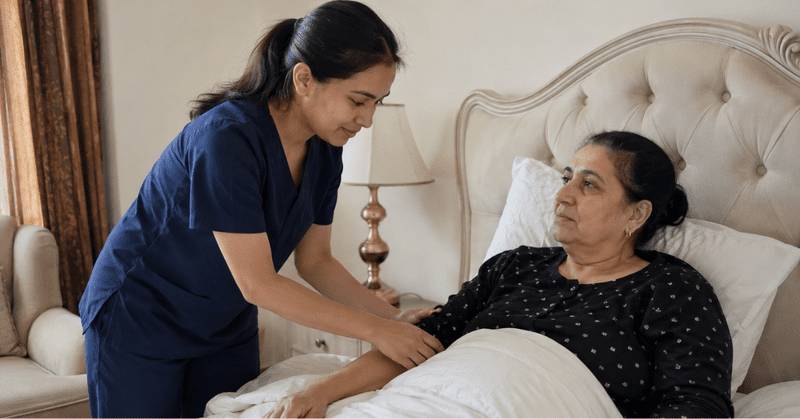
For families caring for someone with myasthenia gravis, managing the condition at home can be challenging. Muscle weakness can fluctuate throughout the day, swallowing may become difficult, and severe exacerbations can potentially lead to respiratory failure. This makes appropriate home nursing care for myasthenia gravis particularly important for patients who require regular monitoring and assistance with daily activities.
What Is Myasthenia Gravis?
Myasthenia gravis occurs when the immune system produces antibodies that interfere with receptors involved in communication between nerves and muscles. Normally, the neurotransmitter acetylcholine is released at the neuromuscular junction and binds to receptors, allowing muscles to contract. In myasthenia gravis, antibodies interfere with these receptors, reducing effective muscle contraction and causing weakness.
The thymus gland may also play a role. In some adults with myasthenia gravis, the thymus remains enlarged or may contain a thymic tumor, and it is thought to contribute to the abnormal immune response.
Common Symptoms of Myasthenia Gravis
One of the characteristic features of myasthenia gravis is that muscle weakness tends to worsen with activity and improve after rest. This pattern is particularly important for home nurses and family caregivers to recognize.
Symptoms may include:
- Drooping of one or both eyelids
- Double vision
- Weak facial muscles
- Difficulty making facial expressions
- Weakness in the neck
- Weakness in the arms and legs
- Difficulty chewing
- Difficulty swallowing
- Choking or gagging while eating
- Slurred, soft or hoarse speech
- Shortness of breath
- Fatigue and reduced energy
The condition may also affect the muscles involved in breathing. Severe respiratory muscle weakness requires urgent medical attention.
Why Home Nursing Can Be Important for Myasthenia Gravis
A patient with myasthenia gravis may have good periods followed by significant weakness. A home nurse can provide continuous observation and assistance while helping the patient conserve energy and maintain safety.
Home nursing support may be particularly useful when the patient has:
- Significant muscle weakness
- Difficulty walking or transferring
- Swallowing difficulties
- Increased aspiration risk
- Double vision or impaired vision
- Medication-management needs
- Difficulty performing activities of daily living
- Previous episodes of severe exacerbation
- Respiratory muscle weakness
The goal of home nursing is not simply to assist with routine tasks. It is also to recognize changes in the patient’s condition early and communicate concerning findings to the treating medical team.
Respiratory Monitoring at Home
Respiratory status is one of the most important areas of nursing observation in myasthenia gravis.
A home nurse should monitor for changes such as:
- Increased breathing difficulty
- Shortness of breath during conversation
- Increasing respiratory effort
- Reduced ability to speak because of breathlessness
- Sudden worsening of generalized weakness
- Difficulty clearing secretions
Severe weakness of the respiratory muscles can progress to respiratory failure and may require intubation and mechanical ventilation.
For patients at risk of acute deterioration, appropriate emergency and resuscitation equipment should be readily accessible according to the patient’s care plan.
Any significant or rapidly worsening breathing difficulty should be treated as an emergency and requires immediate medical assessment.
Monitoring Swallowing and Aspiration Risk
Swallowing difficulties are common because the muscles responsible for chewing and swallowing can become weak. This creates a risk of food or fluids entering the airway.
Home nurses can help by observing:
- Difficulty chewing
- Coughing or choking during meals
- Gagging
- Changes in voice after swallowing
- Difficulty swallowing medications
- Prolonged meal times
- Signs of fatigue during eating
The patient may require assessment by a speech and swallowing specialist. Depending on the assessment, recommendations may include modified food textures or thickened liquids.
Patients with swallowing difficulties should also be positioned appropriately during meals. The source material recommends maintaining the head of the bed above 30 degrees and following the swallowing specialist’s recommendations.
Helping With Meals
Eating can become exhausting for a person with myasthenia gravis because chewing itself requires repeated muscle activity.
Home nursing care can therefore focus on energy conservation during meals.
Helpful strategies described in the source include:
- Offering smaller meals
- Choosing softer foods that require less chewing
- Scheduling larger meals earlier in the day when muscle strength may be better
- Offering small bites
- Following any prescribed modified diet
- Administering prescribed medication according to the patient’s medication schedule and medical instructions
Examples of softer foods may include soup or mashed foods rather than foods requiring extensive chewing.
Medication Support
One commonly used medication class for myasthenia gravis is acetylcholinesterase inhibitors, including pyridostigmine. These medications help make more acetylcholine available at the neuromuscular junction.
A home nurse may assist with medication administration according to the physician’s prescription and monitor the patient for changes in strength, swallowing, breathing and other symptoms.
Medication timing may be particularly important around meals or activities requiring greater muscle effort. The source material notes that pyridostigmine may be scheduled around meals so that its effects support chewing and swallowing.
Patients and caregivers should never change the dose or timing of prescribed medication without medical advice.
Preventing Falls at Home
Patients with myasthenia gravis may have an increased risk of falling because of:
- Weakness in the legs and arms
- Double vision
- Reduced visual coordination
- Fatigue
- Shortness of breath
- Reduced physical endurance
The source recommends avoiding unassisted walking when weakness or double vision makes mobility unsafe.
A home nurse can support safe transfers, walking and positioning while helping the family maintain a safer home environment.
Planning Activities Around Energy Levels
Energy conservation is an important component of home care.
Because muscle weakness can become worse after repetitive activity, demanding activities may be better scheduled during periods when the patient has greater strength. The source specifically highlights morning activities following adequate rest.
A home nurse can help organize the patient’s day around:
- Rest periods
- Medication schedules
- Meals
- Personal hygiene
- Exercise or prescribed therapy
- Medical appointments
- Other essential activities
The objective is to avoid unnecessary exhaustion while still encouraging appropriate independence.
Myasthenic Crisis: A Serious Emergency
Myasthenic crisis is a severe exacerbation of myasthenia gravis that can cause profound muscle weakness and respiratory failure.
Potential triggers discussed in the source include inadequate medication, physical or emotional stress and respiratory infections.
Warning signs that require urgent medical attention can include rapidly worsening weakness, difficulty swallowing, inability to keep the eyes open, difficulty speaking and increasing breathing difficulty.
A home nurse should recognize these changes promptly and activate the appropriate emergency response rather than attempting to manage a suspected crisis independently at home.
Cholinergic Crisis
Cholinergic crisis can occur when there is excessive acetylcholinesterase-inhibitor medication. It can also produce severe muscle weakness and respiratory problems, making it difficult to distinguish from myasthenic crisis based on weakness alone.
The source describes additional manifestations associated with excessive cholinergic activity, including increased secretions, bronchoconstriction, gastrointestinal symptoms, bladder incontinence and bradycardia.
Because both conditions can become life-threatening, suspected crisis requires urgent medical evaluation.
Nursing Assessment for Myasthenia Gravis at Home
A structured home nursing assessment can include monitoring:
Respiratory status
Observe breathing effort, respiratory rate and the patient’s ability to speak without becoming excessively breathless.
Neuromuscular function
Monitor changes in weakness involving the face, neck, arms and legs.
Vision
Ask whether the patient is experiencing double vision or worsening eyelid drooping.
Speech
Observe for slurred, weak or increasingly hoarse speech.
Swallowing
Monitor the patient’s ability to safely swallow food, fluids and prescribed medications.
Mobility
Assess whether the patient can safely stand, transfer and walk.
Fatigue
Identify activities that rapidly increase weakness and plan rest periods accordingly.
These observations can help identify changes in the patient’s condition and provide useful information to the treating healthcare team.
Medical Treatments for Myasthenia Gravis
There is no single cure described in the source, but treatment can improve symptoms and quality of life. Treatment may include acetylcholinesterase inhibitors, corticosteroids or other immunosuppressive medications.
Some patients may undergo a thymectomy, while severe cases may be treated with therapies such as plasmapheresis or intravenous immunoglobulin. Plasmapheresis works by filtering antibodies from the blood and may provide temporary improvement.
Home nurses do not replace the neurologist or other members of the medical team. Instead, they provide ongoing care and observation between clinical appointments and help the patient follow the prescribed care plan.
How Home Nursing Supports Patients With Myasthenia Gravis
Professional home nursing can provide a combination of clinical observation and practical assistance, including:
- Monitoring respiratory status
- Monitoring muscle weakness
- Supporting medication administration
- Observing swallowing difficulties
- Supporting safe meals
- Preventing falls
- Assisting with mobility and transfers
- Helping with personal care
- Planning activities around periods of greater strength
- Supporting rest and energy conservation
- Monitoring for changes that require medical attention
- Communicating relevant observations to family members and healthcare professionals
For families caring for someone with myasthenia gravis, this type of support can make day-to-day care more structured and safer.
Myasthenia gravis can significantly affect a person’s ability to move, eat, communicate and breathe. Because muscle weakness can fluctuate and may worsen with activity, home care needs to be carefully planned around the patient’s strength, medication schedule and individual medical recommendations.
A trained home nurse can play an important role in monitoring symptoms, supporting safe nutrition and mobility, assisting with prescribed medications and recognizing potentially serious changes in respiratory or neuromuscular function.
For families caring for a person with myasthenia gravis, home nursing is best viewed as an extension of the patient’s overall healthcare plan, providing consistent observation and practical support while keeping the treating medical team informed of important changes.
Author
-

Mina Kumari BK is a DHA-licensed Registered Nurse at JPR Home Health Care, Dubai, with a strong focus on IV therapy and wellness-based nursing care. She specializes in delivering safe, effective IV drip treatments at home, supporting hydration, energy, and overall patient recovery.
Originally from Nepal and a graduate of Nobel College, Pokhara (2024), Mina brings hands-on experience in IV cannulation, infusion monitoring, and patient care. Since joining JPR, she has become a reliable choice for clients seeking professional in-home IV therapy with comfort and precision.
Her core competencies include:
Administration of IV drips for hydration, energy, and wellness support
Skilled IV cannulation and safe infusion monitoring
Patient assessment and vital signs monitoring before and during IV therapy
Post-treatment care and observation to ensure patient safety
General nursing care and recovery support in home settings
Mina is known for her gentle technique, attention to detail, and commitment to patient comfort, making her a trusted nurse for IV therapy services in Dubai.
DHA License
License Number: 64192972-001
