
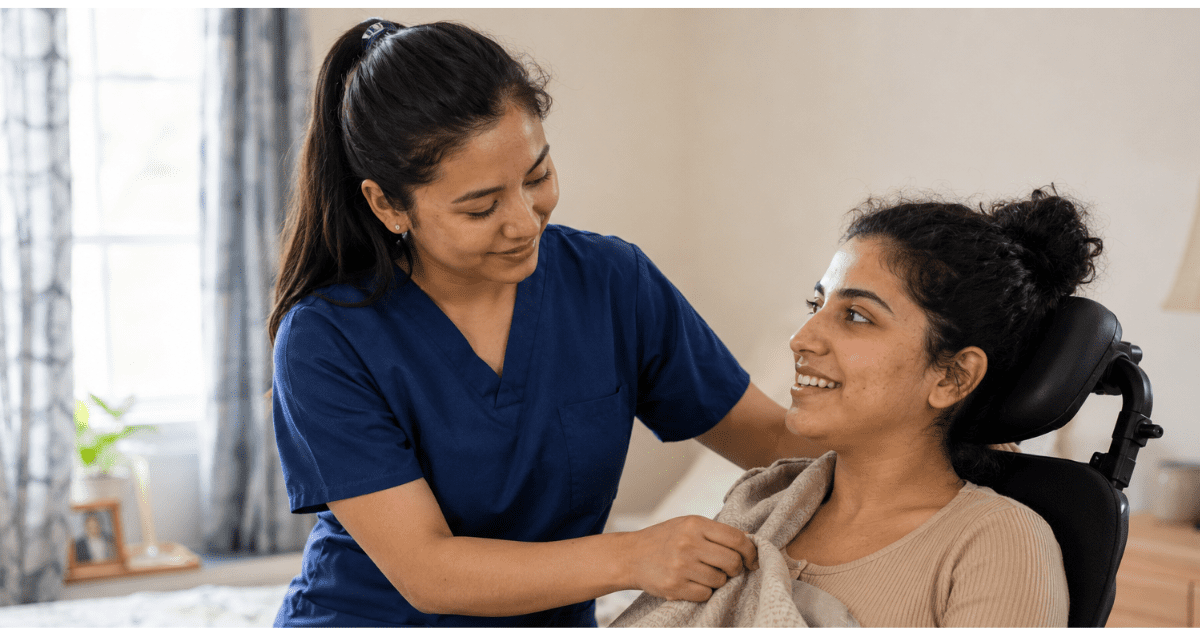
When a family member is diagnosed with cerebral palsy, it’s natural to have many questions. As a DHA licensed home care nurse, I’ve cared for children, teenagers, and adults with cerebral palsy in their own homes across Dubai. Every individual is different, but one thing remains the same. With the right nursing care, therapy, and family support, many people with cerebral palsy can enjoy a better quality of life while remaining safely at home.
Below are some of the questions families ask me most often.
My child has cerebral palsy. Can a home nurse really make a difference?
Yes, absolutely.
One of the first things I tell families is that home nursing is not just about providing medical care. It’s about helping your loved one stay comfortable, safe, and as independent as possible in familiar surroundings.
During my visits, I don’t simply administer medications or monitor vital signs. I also observe how your loved one moves, eats, sleeps, communicates, and responds to everyday activities. Small changes can sometimes indicate that they need medical attention, and identifying these changes early can help prevent complications.
Many parents also tell me that having a professional nurse by their side gives them confidence and peace of mind because they know someone experienced is helping monitor their child’s health.
What exactly is cerebral palsy?
Cerebral palsy is a neurological condition that affects movement, posture, muscle tone, and coordination.
It develops because the brain does not develop normally before birth or because the developing brain is injured before, during, or shortly after birth.
One important point I always explain to families is that cerebral palsy itself does not progressively damage the brain. The brain injury remains the same throughout life. However, as children grow or adults age, their physical challenges and care needs can change, which is why ongoing assessment and support remain so important.
What symptoms should families expect?
No two people with cerebral palsy are exactly alike.
Some children may walk independently with only mild stiffness, while others require complete assistance with daily activities.
The symptoms I commonly see during home visits include:
- Muscle stiffness or spasticity
- Poor balance and coordination
- Difficulty walking
- Muscle weakness
- Involuntary movements
- Delayed motor milestones
Some individuals may also experience:
- Difficulty swallowing
- Speech difficulties
- Vision or hearing problems
- Seizures
- Intellectual disabilities
- Feeding challenges
My role as a home nurse is to monitor these symptoms carefully, recognize any changes early, and communicate concerns with the treating physician and therapy team.
How does a home nurse help someone with cerebral palsy every day?
Families are often surprised by how much support a home nurse can provide.
A typical visit may include medication administration, feeding assistance, skin assessment, personal hygiene, mobility support, stretching exercises prescribed by the physiotherapist, seizure monitoring, bladder and bowel care, and educating family members about safe caregiving techniques.
I also spend time teaching parents and caregivers simple strategies they can continue even when I am not there. Consistency is one of the biggest factors that helps individuals with cerebral palsy achieve their full potential.
My loved one has severe muscle stiffness. Can nursing care help?
Yes.
Muscle spasticity is one of the most common concerns I see.
While medications such as baclofen or Botulinum toxin injections may be prescribed by the physician, nursing care plays an important role in helping these treatments work effectively.
During my visits, I help with safe positioning, gentle range-of-motion exercises recommended by the physiotherapist, monitoring muscle tightness, identifying pain caused by spasticity, and watching for early signs of joint contractures.
Simple adjustments to positioning throughout the day can significantly improve comfort.
My child struggles to swallow food safely. How can a home nurse help?
Swallowing difficulties require careful attention because they increase the risk of choking and aspiration.
Whenever I assist with feeding, I ensure the child is sitting in the safest position possible. I encourage slow feeding, observe carefully for coughing or choking, and watch for any signs that food or fluids may be entering the airway.
If tube feeding has been recommended, I can safely administer feeds, monitor the feeding site, and teach family members how to care for the equipment confidently at home.
Can a home nurse help prevent bed sores?
Definitely.
Individuals who have limited mobility spend long periods in one position, which increases their risk of pressure injuries.
One of my priorities during every visit is checking the skin carefully, particularly over bony areas. I also assist with regular repositioning, recommend pressure-relieving equipment when appropriate, and educate families about protecting the skin between nursing visits.
Preventing a pressure injury is always easier than treating one.
My loved one also has seizures. Is it safe to care for them at home?
Many individuals with cerebral palsy also have epilepsy.
As a DHA licensed nurse, I monitor seizure activity, keep the individual safe during an episode, administer emergency medication if prescribed, document seizure patterns, and report any concerning changes to the doctor.
Just as importantly, I teach family members what to do during a seizure and what actions to avoid so they feel more prepared and less anxious.
How important is physiotherapy?
I always tell families that nursing care and physiotherapy work hand in hand.
The physiotherapist develops the treatment plan, while I help reinforce those exercises and positioning techniques during daily care.
Regular movement, stretching, and safe mobility can help maintain flexibility, improve comfort, and reduce complications caused by prolonged immobility.
Can adults with cerebral palsy benefit from home nursing too?
Absolutely.
Many people think cerebral palsy only affects children, but I regularly care for adults living with the condition.
As people age, they may experience increased pain, fatigue, arthritis, reduced mobility, or other medical conditions that make professional nursing support even more valuable.
Home nursing helps adults continue living safely and comfortably while maintaining as much independence as possible.
When should a family consider hiring a home nurse?
I usually recommend considering professional home nursing if your loved one:
- Has difficulty walking or transferring safely
- Experiences muscle stiffness that limits daily activities
- Has swallowing difficulties
- Requires medication management
- Has frequent seizures
- Needs assistance with bathing or personal hygiene
- Is at risk of pressure sores
- Requires bladder or bowel care
- Needs close monitoring after surgery or hospitalization
- Has family caregivers who need professional support or temporary respite
Every family is different, so the level of nursing care should always be tailored to the individual’s medical needs and daily routine.
My message to families caring for someone with cerebral palsy
One thing I have learned through years of home nursing is that cerebral palsy affects the entire family, not just the individual living with the condition.
Parents often worry whether they are doing enough. Adult children caring for aging parents with cerebral palsy sometimes feel physically and emotionally exhausted. These feelings are completely understandable.
You do not have to manage everything alone.
Professional home nursing for cerebral palsy is not about replacing family care. It is about working alongside your family, providing clinical expertise, helping prevent complications, supporting rehabilitation, and giving your loved one the opportunity to receive compassionate, skilled care in the comfort and familiarity of home.
Author
-

Sony Thapa is a DHA-licensed registered nurse in Dubai, currently serving as a dedicated home care nurse with JPR Home Health Care. She specializes in elderly care, offering compassionate, respectful, and patient-centered nursing support to seniors in the comfort of their homes.
Originally from Nepal, Sony completed her Diploma in Nursing in Kathmandu in 2016. With nearly a decade of hands-on experience and a strong grounding in geriatric care, she joined JPR Home Health Care in March 2025 and quickly became a trusted presence among families seeking dependable care for aging loved ones.
Sony’s expertise includes assisting with daily living activities, chronic disease monitoring, post-hospital rehabilitation, medication management, and fall prevention. Her calm demeanor and gentle communication style make her especially effective with seniors who may be coping with dementia, mobility challenges, or emotional vulnerability.
She follows strict DHA guidelines while bringing a deeply human touch to every patient interaction, always ensuring safety, hygiene, and dignity come first. For families navigating the complexities of elderly care at home, Sony provides both peace of mind and professional excellence.
DHA License
License Number: 98504622-001
DHA Profile: https://services.dha.gov.ae/sheryan/wps/portal/home/medical-directory/professional-details?dhaUniqueId=98504622
