

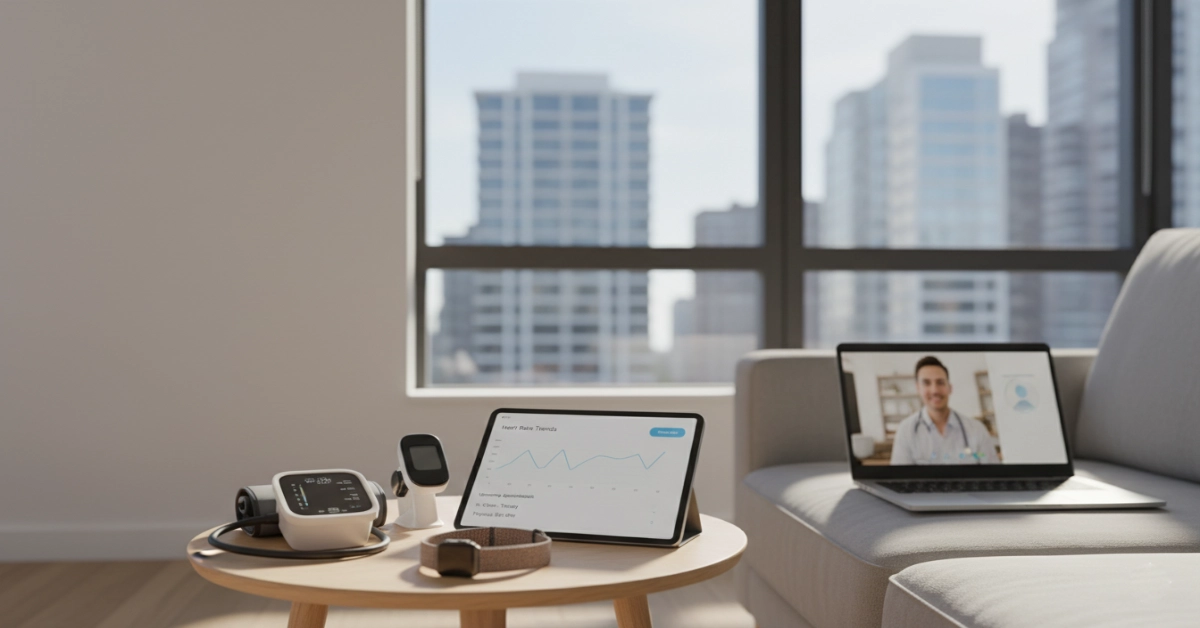
The Rise of Home Based Smart Healthcare
1. Smart Monitoring Technologies
Wearable devices and in home sensors can continuously collect health data such as heart rate, oxygen levels, sleep patterns, and movement. These systems alert not only patients but also care teams when abnormalities arise. This real time monitoring allows issues to be detected early and acted on quickly, often without an in person visit.
2. Telemedicine and Virtual Clinics
Telemedicine expanded rapidly during the COVID 19 pandemic and has continued to grow. Virtual consultations mean that many routine appointments, follow ups, and even some specialist visits can occur online. This reduces the burden on physical clinics and allows doctors to care for patients wherever they are.
3. AI and Predictive Health
Artificial intelligence can analyze patterns in health data to predict medical issues before symptoms occur. For example, AI can identify early signals of heart failure or metabolic imbalance, enabling timely intervention. In a smart city environment, this approach can be applied across large populations.
4. Connected Care Ecosystems
Smart cities rely on integrated digital platforms that combine health, environmental, and lifestyle data. This ecosystem supports personalized care plans and coordinated responses. If environmental conditions worsen for asthma patients, alerts and support can be delivered proactively.
Why Hospitals Will Not Disappear
Despite the rise of intelligent home care systems, hospitals are unlikely to become obsolete.
Emergency and Acute Care
Hospitals remain essential for emergencies, surgeries, trauma management, and advanced diagnostics that cannot be safely delivered at home.
Advanced Treatments and Infrastructure
Highly specialized treatments such as intensive care, oncology therapies, and complex procedures require hospital grade equipment and multidisciplinary teams.
Clinical Judgment and Human Presence
Technology supports care, but hands on clinical assessment and in person decision making remain irreplaceable for many conditions.
The Evolving Role of Hospitals in Smart Cities
Smart cities will not make hospitals irrelevant. Instead, they will redefine their function.
1. Hospitals as Specialized Care Hubs
Hospitals will focus on complex diagnostics, acute interventions, and advanced treatments. Routine monitoring and recovery care will increasingly take place at home.
2. Seamless Care Transitions
Patients will move smoothly between home care, outpatient services, and hospital settings. Health data will remain continuous and accessible across the care journey.
3. Greater Emphasis on Prevention
Continuous monitoring and early detection will reduce avoidable hospital admissions. Care shifts from reacting to illness toward preventing it.
Challenges That Still Need Solving
The smart city healthcare model brings clear benefits, but challenges remain.
Data Privacy and Security
Large scale data collection raises concerns around ownership, consent, and cybersecurity.
Digital Access and Equity
Not all populations have equal access to smart devices or digital literacy. Inclusive design is critical.
Regulation and Clinical Standards
Healthcare innovation must align with regulatory frameworks to ensure safety, accuracy, and accountability.
Patient Trust and Preferences
Some individuals will always prefer face to face care. Adoption depends on comfort, trust, and perceived quality.
Author
-

Shanta Chaudhary is a DHA-licensed registered nurse based in Dubai, currently delivering compassionate and professional home nursing services with JPR Home Health Care. She is dedicated to providing personalized care that supports patients’ recovery and wellbeing in the comfort of their own homes.
Originally from Nepal, Shanta graduated from Hamro School of Nursing in Biratnagar in 2019. Since joining JPR Home Health Care in June 2025, she has been actively involved in a variety of home care services including medication management, wound care, vital signs monitoring, and assisting with daily living activities.
Her attentive and patient-centered approach helps ease the challenges faced by patients recovering from surgery, managing chronic conditions, or requiring ongoing nursing support. Shanta ensures each care plan is followed meticulously, prioritizing safety, hygiene, and comfort in every visit.
By adhering to DHA guidelines and best practices, Shanta consistently provides reliable, high-quality nursing care that promotes healing and independence at home.
DHA License
License Number: 07586284-001
DHA Profile: https://services.dha.gov.ae/sheryan/wps/portal/home/medical-directory/professional-details?dhaUniqueId=07586284
