

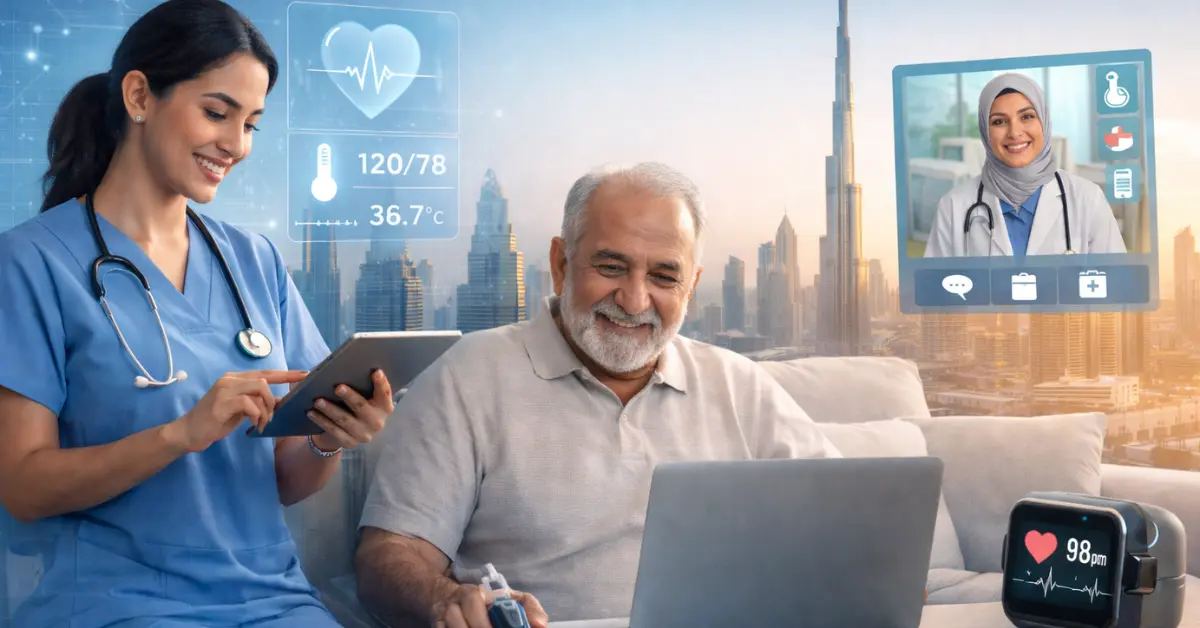
Have you ever worried about an elderly parent living alone, or wondered how a loved one is coping after surgery once they’re back home? Many families share the same concern: How do we ensure continuous medical supervision without constant hospital visits? This is where technology is quietly, but powerfully, changing the landscape of home health care.
Across the UAE, remote monitoring and telehealth are becoming essential tools in modern caregiving. They bridge the gap between clinical expertise and everyday life, allowing patients to receive safe, responsive care without leaving their homes. For families exploring home health care in Dubai, this blend of technology and human support is redefining what quality care looks like.
What Is Remote Monitoring in Home Care?
Remote patient monitoring (RPM) uses medical devices to track vital health data from a patient’s home and transmit it securely to healthcare professionals. These devices may monitor blood pressure, blood glucose levels, heart rate, oxygen saturation, or even sleep patterns.
According to the World Health Organization (WHO), remote monitoring improves early detection of health deterioration, especially in patients with chronic conditions. Similarly, Mayo Clinic highlights its role in reducing emergency hospital visits by catching warning signs early.
In practical terms, this means a nurse or physician can intervene before a situation becomes urgent, often with a simple medication adjustment or timely visit. For patients receiving home health care services, this proactive approach offers both safety and reassurance.
Telehealth: Medical Expertise Without the Commute
Telehealth allows patients to consult doctors, nurses, or specialists through secure video calls or digital platforms. It’s particularly valuable for follow-ups, medication reviews, wound assessments, and chronic disease management.
The Cleveland Clinic notes that telehealth improves care continuity and patient engagement, especially for those with mobility challenges. In the UAE, telehealth has also been embraced as part of the government’s broader digital health strategy, supporting faster access to care while maintaining regulatory oversight.
For families relying on home health care in Dubai, telehealth reduces the stress of frequent clinic visits, traffic, and waiting rooms, without sacrificing professional guidance.
How Technology Enhances Home Health Care Services
Technology doesn’t replace nurses or caregivers; it strengthens them. When combined with skilled clinical support, digital tools enhance accuracy, responsiveness, and overall outcomes.
Here’s how technology elevates home health care services:
- Real-time alerts notify healthcare teams if vitals fall outside safe ranges
- Digital care records ensure every clinician is informed and aligned
- Video check-ins allow quick assessments without delays
- Remote medication reminders support adherence and reduce errors
Academic studies published in journals such as The Lancet Digital Health show that integrated remote monitoring reduces hospital readmissions and improves patient satisfaction, two outcomes that matter deeply to families.
Who Benefits Most From Remote Monitoring & Telehealth?
While many people can benefit, these technologies are particularly valuable for:
- Elderly patients living alone
- Post-surgical patients recovering at home
- Individuals managing diabetes, hypertension, or heart disease
- Patients requiring long-term nursing support
In these cases, home health care in Dubai becomes not just convenient, but clinically safer when supported by digital oversight.
Data Security and Medical Oversight in the UAE
One common question families ask is, Is my loved one’s data safe? This concern is valid and addressed.
In the UAE, telehealth and remote monitoring platforms must comply with local health authority regulations, including data protection standards. Healthcare providers are required to use secure systems and maintain confidentiality, aligning with international best practices recommended by the WHO.
When choosing home health care services, it’s important to confirm that providers use licensed platforms and trained professionals, not consumer-grade apps.
The Human Side of High-Tech Care
Despite all the technology, the heart of home care remains a human connection. A screen cannot replace compassion, clinical judgment, or the reassurance of a skilled nurse at the bedside.
Instead, technology acts as an extra layer of vigilance, quietly watching, recording, and alerting, so caregivers can focus on what matters most: comfort, dignity, and healing.
For families navigating care decisions, this balance is what makes modern home health care in Dubai both advanced and deeply personal.
Final Thoughts: A Smarter Way to Care at Home
Technology has transformed how we shop, work, and communicate, and healthcare will follow suit. Remote monitoring and telehealth allow families to stay informed, patients to stay safe, and clinicians to stay connected.
If you’re considering home health care services, ask providers about their use of remote monitoring and telehealth tools. It’s a simple question that can make a meaningful difference in outcomes and peace of mind.
Practical takeaway: Choose home care that combines professional nursing with smart technology. The future of care isn’t just at home; it’s connected, responsive, and designed around real lives.
Author
-

Shanta Chaudhary is a DHA-licensed registered nurse based in Dubai, currently delivering compassionate and professional home nursing services with JPR Home Health Care. She is dedicated to providing personalized care that supports patients’ recovery and wellbeing in the comfort of their own homes.
Originally from Nepal, Shanta graduated from Hamro School of Nursing in Biratnagar in 2019. Since joining JPR Home Health Care in June 2025, she has been actively involved in a variety of home care services including medication management, wound care, vital signs monitoring, and assisting with daily living activities.
Her attentive and patient-centered approach helps ease the challenges faced by patients recovering from surgery, managing chronic conditions, or requiring ongoing nursing support. Shanta ensures each care plan is followed meticulously, prioritizing safety, hygiene, and comfort in every visit.
By adhering to DHA guidelines and best practices, Shanta consistently provides reliable, high-quality nursing care that promotes healing and independence at home.
DHA License
License Number: 07586284-001
DHA Profile: https://services.dha.gov.ae/sheryan/wps/portal/home/medical-directory/professional-details?dhaUniqueId=07586284
