

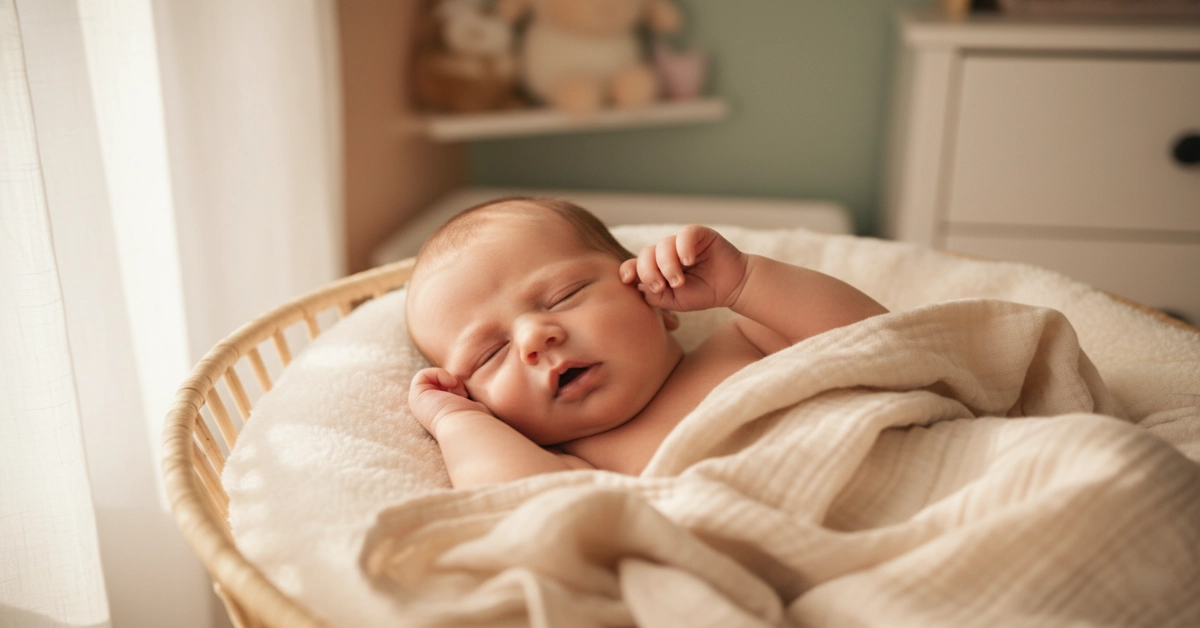
Ask any new parent about sleep and the answer is usually the same. Confusing. Unpredictable. A little exhausting.
Newborns do sleep a lot, technically. Around 14 to 17 hours within a 24-hour period, according to the American Academy of Sleep Medicine. But those hours rarely arrive in long, predictable stretches. Instead they come in scattered pieces across the day and night. Which means parents spend a lot of time wondering: Is the baby hungry? Awake? Or already tired?
Here is something many caregivers discover the hard way. Babies usually show signs of tiredness before they cry. Miss those signals and things can unravel quickly. An overtired newborn may become restless, fussy, and surprisingly difficult to settle.
Learning to notice early sleep cues can make naps smoother and bedtime less stressful. Not perfect, of course. But easier.
Below are some of the cues that tend to appear first.
Slower Movements and a “Powering Down” Body
Often the earliest cue is subtle. Movements simply slow down.
A baby who was stretching, kicking, or waving their arms around suddenly seems quieter. Limbs relax. The body feels heavier against whoever is holding them.
Almost as if someone dimmed the internal lights.
Infant sleep researchers describe these shifts as part of normal transitions between alertness states. The National Sleep Foundation explains that babies move between active and quiet states during wake time, and reduced activity often appears as the body prepares for sleep.
You can read more here:
If parents respond during this calm stage, babies often settle more easily.
The Blank Stare
Another common cue is what many parents call the “faraway look.”
A baby who was watching faces or lights may suddenly stop engaging. Their eyes drift past people or objects. No crying. No excitement. Just a quiet, distant gaze.
It may look like calm curiosity, but often it is actually the brain disengaging from stimulation.
Think of it as the baby quietly saying: that’s enough for now.
Droopy or Red-Rimmed Eyes
Eyes can reveal fatigue quickly.
Sleepy newborns may blink slowly or struggle to keep their eyelids open. The eyelids droop, and sometimes the skin around the eyes looks slightly pink or tired.
Pediatric sleep guidance from the American Academy of Pediatrics notes that drooping eyelids and reduced eye contact can be early signs of sleepiness in infants.
Parents can review the guidance here:
Once these signs appear, starting a calming sleep routine often helps.
Yawning (A Slightly Late Signal)
Yawning is an obvious signal. But it is not always the earliest one.
In newborns, yawning sometimes appears after earlier cues were already missed. By that point the baby may be edging toward overtiredness.
That does not mean sleep is impossible. It simply means settling may take more effort.
Face Rubbing or Eye Rubbing
This cue becomes more noticeable as babies grow through the first months.
Small fists rub across the eyes. Or the baby presses their face against a caregiver’s shoulder. The movement can look clumsy, almost impatient.
But it is a classic fatigue behavior. Pediatric developmental resources from Stanford Medicine Children’s Health describe eye rubbing and facial rubbing as common signs that infants are becoming tired.
Turning Away From Stimulation
Sometimes the cue is not about activity. It is about avoidance.
A tired newborn may turn their head away from faces, lights, or voices. Parents often think the baby is uninterested or upset.
In reality, the baby may simply be overwhelmed.
Newborn brains are still learning to process sensory information. When stimulation becomes too much, babies often disengage to protect their nervous system.
Turning away is one way they do that.
Mild Fussiness
Before the dramatic crying begins, there is usually a quieter stage.
Short grunts. Little whimpers. Restless arms and legs.
Parents sometimes assume hunger is the cause. And sometimes it is. But fatigue can produce the same early fussing.
If sleep happens during this stage, the baby often settles more quickly than after full crying begins.
Why Timing Matters
Newborn wake windows are surprisingly short.
Many babies can comfortably stay awake for about 45 to 60 minutes in the early weeks of life. Pediatric guidance from the Cleveland Clinic describes how newborns quickly accumulate sleep pressure during these short wake periods.
More details are available here:
When babies remain awake too long, the body may release stress hormones like cortisol. That extra alertness can make it harder for them to fall asleep.
So the goal is simple in theory. Notice the cues early. Help the baby settle before exhaustion takes over.
A Safe Sleep Environment Is Still Essential
Sleep cues help with timing, but safety matters just as much.
Current safe sleep recommendations from the American Academy of Pediatrics and the World Health Organization advise:
• placing babies on their back to sleep
• using a firm, flat mattress
• avoiding pillows, blankets, and soft toys in the crib
• keeping the sleep area calm and uncluttered
These measures are designed to reduce sleep-related risks in infancy.
Every Baby Has Their Own Pattern
Here is the part most guides do not emphasize enough. Babies are individuals. Even in the first weeks.
Some grow quiet when tired. Others become fussy. A few seem oddly energetic right before they crash.
Which means parents should not rely only on a checklist. The better strategy is observation.
Watch closely. Patterns start to appear. Maybe it is that distant stare. Maybe the slow blinking. Maybe the head turning away from stimulation.
Eventually the signals become familiar.
And once that happens, sleep tends to arrive a little more smoothly. For the baby. And for everyone else in the house.
Author
-

Smriti Manandhar is a DHA-licensed Assistant Nurse currently serving at JPR Home Health Care in Dubai, with a specialization in baby care and pediatric home nursing. Originally from Nepal, she graduated with a Diploma in Nursing from Kathmandu in 2019 and has since dedicated her career to providing compassionate, safety-focused care for infants and young children.
Smriti joined JPR Home Health Care in June 2025 and quickly became a trusted presence for families seeking reliable home-based nursing support for newborns, toddlers, and children with special medical needs.
Her scope of care includes:
- Monitoring vital signs and developmental milestones
- Feeding support and hygiene care for newborns
- Administering prescribed medications
- Gentle assistance with sleep routines and postnatal care
- Supporting parents with child health education and confidence-building
With a warm demeanor and a meticulous approach to pediatric care, Smriti ensures each child receives attentive, personalized support always aligned with DHA guidelines and best practices in pediatric nursing.
DHA License
License Number: 18956039-001
DHA Profile: https://services.dha.gov.ae/sheryan/wps/portal/home/medical-directory/professional-details?dhaUniqueId=18956039
