

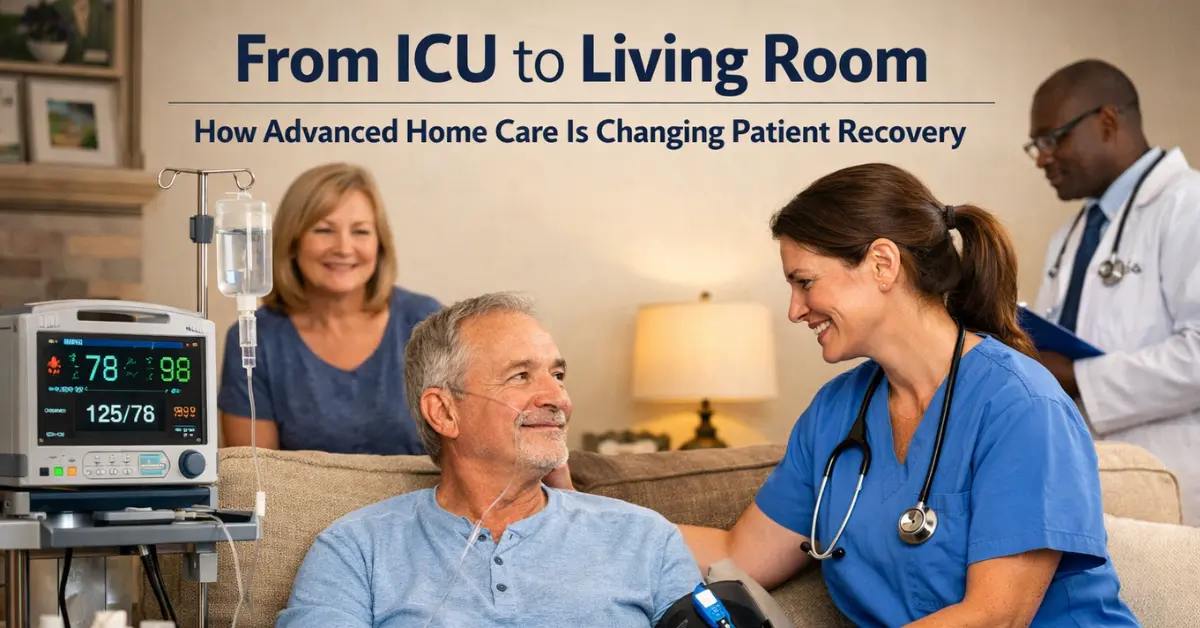
Have you ever watched a loved one recover in a hospital room and quietly wondered, Would they heal better at home?
It’s a question many families ask after an ICU stay, surgery, or serious illness. The beeping monitors fade. Visiting hours end. And suddenly, recovery feels clinical, distant, and even lonely.
Today, healthcare is offering a new answer.
Advanced home care is making it possible for patients to transition from intensive hospital treatment to structured medical support at home. Not basic caregiving, but real, clinically supervised care. And for many people, that change is reshaping how recovery feels, looks, and unfolds.
What Does “Advanced Home Care” Actually Include?
Advanced home care (sometimes called Hospital-at-Home) brings hospital-level services into the home environment. Depending on the patient’s condition, this may involve:
IV infusion therapy
Oxygen and respiratory support
Post-surgical wound management
Medication administration and monitoring
Vital sign tracking
Palliative symptom control
Rehabilitation guidance
Care is delivered by licensed nurses, often coordinated with physicians, and supported by clear escalation plans if symptoms change.
According to Mayo Clinic, home-based medical care for selected patients can lead to outcomes comparable to inpatient treatment, while improving comfort and reducing exposure to hospital-acquired infections.
In other words, recovery doesn’t have to stay confined within hospital walls.
Why Healing at Home Often Works Better
There’s something powerful about familiar surroundings.
Patients tend to sleep more naturally at home. They eat better. They move more. Stress levels fall. Family presence becomes constant rather than scheduled.
Clinical evidence supports this intuition. Research summarized by Cleveland Clinic shows that appropriately designed home-care programs can reduce readmissions and improve patient satisfaction, particularly for older adults and those managing chronic illness.
On a broader scale, the World Health Organization promotes community-based healthcare as a key strategy for aging populations and long-term disease management, emphasizing continuity of care beyond hospital discharge.
Recovery, it turns out, is not just medical. It’s emotional, environmental, and deeply personal.
From ICU to Living Room: What This Transition Looks Like
Imagine a patient recovering from severe pneumonia.
Instead of remaining hospitalized for weeks, they return home once stabilized. A nurse visits daily. Oxygen levels are checked. IV medications are administered safely. Breathing exercises are guided. Family members receive clear instructions on warning signs, when to call, when to wait, and when to escalate.
Or consider someone discharged after major surgery. Pain is monitored. Dressings are changed. Mobility is gently encouraged. Medications are managed precisely.
These are the moments when professional home nursing services in Abu Dhabi become essential, providing clinical care while preserving the comfort of home.
Likewise, families increasingly rely on home health care services Abu Dhabi for patients needing ongoing monitoring, infusion therapy, or recovery support. It’s not about replacing hospitals. It’s about extending their expertise into everyday life.
Safety First: Who Is Advanced Home Care For?
Not every patient is a candidate for high-acuity home care. Care teams carefully assess:
Medical stability
Home environment safety
Availability of trained staff
Family readiness
Emergency response plans
When these elements align, advanced home care can be both safe and effective.
Multiple academic studies show that structured home programs can lower complication rates and reduce unnecessary readmissions, provided care is delivered by qualified professionals with clear clinical protocols.
This is why choosing experienced providers matters. Whether you’re arranging professional home nursing services in Abu Dhabi or coordinating home health care services Abu Dhabi, always ask about nurse credentials, physician oversight, and emergency procedures.
These details protect outcomes.
A Gentle Note for Family Caregivers
If you’re supporting someone through recovery, you already carry a heavy emotional load.
You may be managing medications, meals, appointments, and worry, all at once.
Professional home nursing doesn’t replace family care. It strengthens it. Nurses handle medical complexity so you can focus on being present. That balance often prevents caregiver burnout while ensuring patients receive consistent clinical attention.
And sometimes, simply having a skilled professional reassure you that healing is progressing normally makes all the difference.
The Takeaway
Advanced home care is changing recovery by bringing hospital-level expertise into the place patients feel safest: home.
For many families, it means fewer hospital stays, gentler healing, and more dignity during vulnerable moments. For patients, it means regaining strength surrounded by familiarity. For caregivers, it means shared responsibility with trained professionals.
Practical next step:
If your loved one is approaching discharge or managing ongoing medical needs, ask their doctor whether advanced home care is appropriate. Then speak with a licensed provider about creating a personalized care plan.
Recovery doesn’t always require more hospital days. Sometimes, it simply needs the right care, delivered where life already happens.
Author
-

Shanta Chaudhary is a DHA-licensed registered nurse based in Dubai, currently delivering compassionate and professional home nursing services with JPR Home Health Care. She is dedicated to providing personalized care that supports patients’ recovery and wellbeing in the comfort of their own homes.
Originally from Nepal, Shanta graduated from Hamro School of Nursing in Biratnagar in 2019. Since joining JPR Home Health Care in June 2025, she has been actively involved in a variety of home care services including medication management, wound care, vital signs monitoring, and assisting with daily living activities.
Her attentive and patient-centered approach helps ease the challenges faced by patients recovering from surgery, managing chronic conditions, or requiring ongoing nursing support. Shanta ensures each care plan is followed meticulously, prioritizing safety, hygiene, and comfort in every visit.
By adhering to DHA guidelines and best practices, Shanta consistently provides reliable, high-quality nursing care that promotes healing and independence at home.
DHA License
License Number: 07586284-001
DHA Profile: https://services.dha.gov.ae/sheryan/wps/portal/home/medical-directory/professional-details?dhaUniqueId=07586284


