

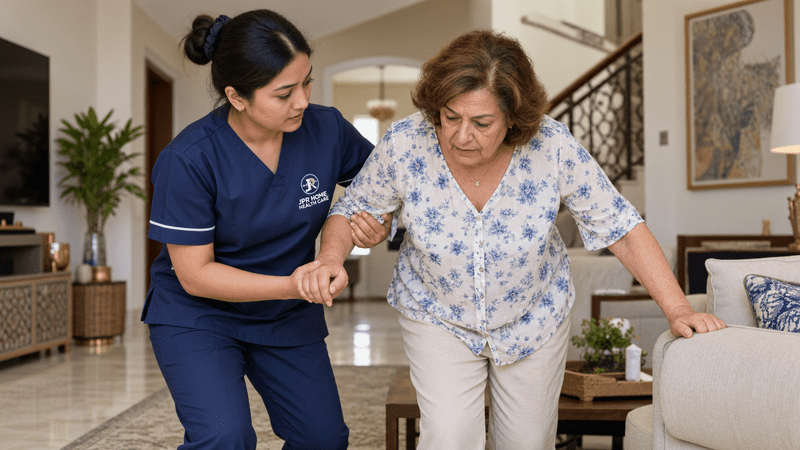
A fall in an elderly parent is rarely just an accident. It is often the first visible sign of something else going wrong: a urinary tract infection, a medication side effect, low blood pressure, weakening leg muscles, or an undiagnosed heart or neurological condition. The problem is that a single visit to a busy doctor after a fall often does not catch all of this. Studies show that older patients frequently do not receive the full evaluation they need after a fall, simply because doctors are rushed and families do not know what to ask for.
This is where having a home nurse involved changes the outcome. A home nursing service does not wait for a fall to happen and then react. It builds ongoing, hands-on observation into your parent’s daily life, which means the warning signs get caught early, and a second or third fall (the one that leads to a hip fracture or a long hospital stay) is far more likely to be prevented.
1. A trained eye catches new illness before it causes a fall
Weakness, confusion, or a sudden change in how your parent walks can be the first sign of an infection, dehydration, anemia, or even a silent heart problem. Family members often notice something is “off” but are not sure if it is serious. A home nurse who sees your parent regularly knows their baseline and can flag subtle changes immediately, rather than these being dismissed as “just getting older.”
2. Blood pressure and pulse checks that hospitals often skip
Many falls happen because blood pressure drops when a person stands up, a condition called orthostatic hypotension. It is extremely common in older adults, especially those on blood pressure medication or certain prostate medications. Checking blood pressure sitting and standing is one of the simplest and most useful tests after a fall, yet it is frequently missed in busy clinical settings. A home nurse can monitor this routinely and flag concerning patterns before they cause a fall, not after.
3. Ongoing medication review
Sedatives, sleeping pills, opioid painkillers, and certain blood pressure or diabetes medications are among the most common contributors to falls in older adults. Many elderly patients end up on doses that are higher than they actually need for their age and health status. A home nurse who sees the full daily medication routine, rather than a snapshot during a short appointment, is far better positioned to notice a medication that needs review and to raise it with the treating doctor.
4. Real monitoring of gait, balance, and strength
Watching how someone walks, whether they can stand up from a chair without using their arms, and how well they balance are simple but powerful indicators of fall risk. These are things a home nurse observes naturally, every single day, rather than in the artificial setting of a clinic visit. Early signs of declining strength or balance can be addressed with physiotherapy referrals before a fall happens, not after.
5. Consistency that catches chronic conditions
Some falls are linked to longer-term conditions such as heart rhythm problems, neuropathy, or Parkinson’s disease. These are conditions that develop gradually and are easy to miss in occasional appointments but far more visible to a caregiver who is present consistently over weeks and months.
6. Bone health and fracture risk awareness
Osteoporosis does not cause falls, but it dramatically increases the risk of a serious fracture when a fall does happen. Many elderly women, and men, are never properly screened for it. A home nursing team that understands a patient’s full medical picture is more likely to flag when osteoporosis screening or treatment has been overlooked.
7. A safer home environment
Beyond the person, the home itself matters. Loose rugs, poor lighting, a bathroom without grab bars, and cluttered walkways are all fixable fall risks. A home nurse who is physically present in the house, rather than only seeing your parent in a clinic, is in the best position to spot these hazards and recommend practical changes.
The bottom line
A fall is a warning sign, not a one-time event to patch up and move past. Preventing the next one requires the kind of continuous, attentive care that a single doctor’s visit cannot provide. Professional elderly care in Dubai gives elderly parents exactly that: a consistent, trained presence that catches the small changes before they become emergencies, so they can stay independent, active, and safe at home for longer.
Author
-

Sony Thapa is a DHA-licensed registered nurse in Dubai, currently serving as a dedicated home care nurse with JPR Home Health Care. She specializes in elderly care, offering compassionate, respectful, and patient-centered nursing support to seniors in the comfort of their homes.
Originally from Nepal, Sony completed her Diploma in Nursing in Kathmandu in 2016. With nearly a decade of hands-on experience and a strong grounding in geriatric care, she joined JPR Home Health Care in March 2025 and quickly became a trusted presence among families seeking dependable care for aging loved ones.
Sony’s expertise includes assisting with daily living activities, chronic disease monitoring, post-hospital rehabilitation, medication management, and fall prevention. Her calm demeanor and gentle communication style make her especially effective with seniors who may be coping with dementia, mobility challenges, or emotional vulnerability.
She follows strict DHA guidelines while bringing a deeply human touch to every patient interaction, always ensuring safety, hygiene, and dignity come first. For families navigating the complexities of elderly care at home, Sony provides both peace of mind and professional excellence.
DHA License
License Number: 98504622-001
DHA Profile: https://services.dha.gov.ae/sheryan/wps/portal/home/medical-directory/professional-details?dhaUniqueId=98504622
