
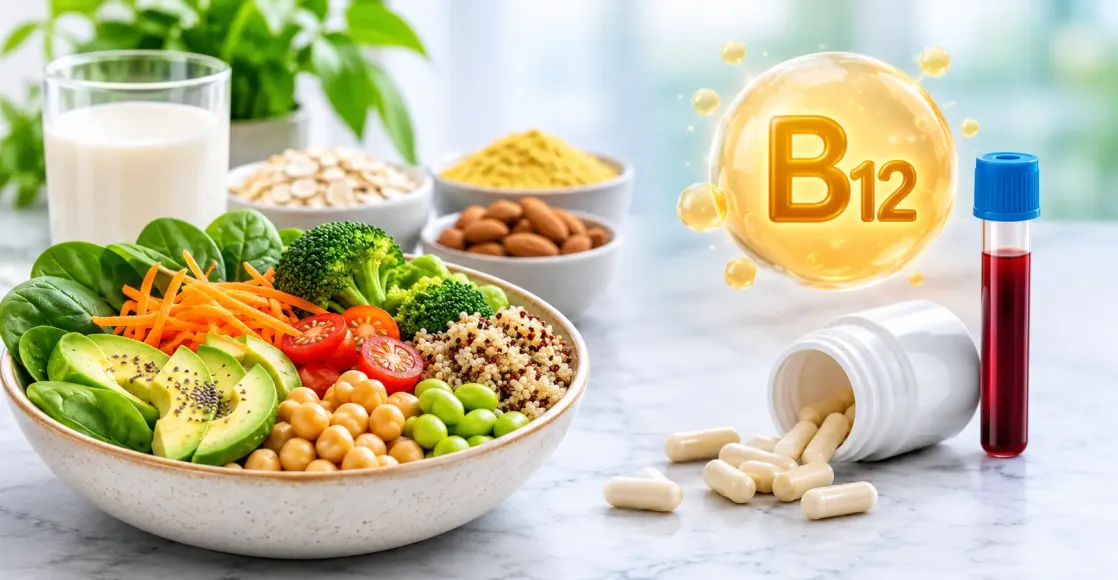
A colourful plate of vegetables, whole grains, nuts and plant-based protein can be part of a nutritious everyday diet. But while these foods provide many valuable nutrients, there is one essential vitamin that deserves special attention when meat, fish and other animal products are removed from the menu.
That nutrient is Vitamin B12.
Unlike many vitamins found across different food groups, naturally occurring Vitamin B12 is concentrated mainly in animal-derived foods. This creates a nutritional consideration for people who follow vegetarian and vegan eating patterns. It does not mean that a plant-based lifestyle is unhealthy. It simply means that obtaining enough B12 requires a little more planning.
What makes this particularly interesting is that a person may feel perfectly well for some time before a deficiency becomes apparent. Understanding dietary sources, recognising potential warning signs and knowing which laboratory investigations are available can help people make better-informed decisions about their nutritional health.
The Nutrient That Deserves a Place on Your Health Checklist
Vitamin B12 performs several jobs that are essential to normal body functioning. It participates in the formation of red blood cells, supports the production of genetic material and helps maintain the nervous system.
One of its most important functions involves the maintenance of myelin, the protective covering around nerve fibres. When B12 availability becomes inadequate, nerve-related problems may gradually develop.
Unlike some nutritional deficiencies that produce immediate and noticeable changes, Vitamin B12 deficiency can develop slowly. The body stores a certain amount of this vitamin, so symptoms may not appear immediately after dietary intake becomes insufficient.
Possible warning signs include persistent tiredness, unusual weakness, pins and needles, reduced sensation in the extremities, difficulty maintaining balance and changes in concentration. Some individuals may also develop a sore tongue or certain forms of anaemia.
These symptoms are not proof of B12 deficiency, but they are reasons to seek appropriate medical advice.
The Plant-Based Diet Question: Where Does B12 Come From?
One interesting aspect of Vitamin B12 is that its natural food sources differ from those of many other essential nutrients.
People following vegetarian diets may obtain B12 through foods such as milk, yoghurt, cheese and eggs. However, the quantity consumed varies considerably between individuals.
For vegans, the situation is different because all animal-derived foods are excluded. They need to identify dependable alternative sources rather than assume that eating a wide variety of vegetables will automatically meet their B12 requirements.
Two options are particularly important:
Fortified foods: Some plant-based milk alternatives, breakfast cereals and nutritional yeast products have Vitamin B12 added during manufacturing. The nutritional information on the packaging should be checked because fortification is not universal.
Vitamin B12 supplements: Supplementation is an established way for people following vegan diets to obtain adequate B12. The appropriate product and intake schedule can be discussed with a healthcare professional.
A useful distinction is that fermented foods, seaweed and ordinary unfortified vegetables should not be relied upon as dependable sources of active Vitamin B12.
Why Eating the Right Foods Is Not Always the Entire Solution
There is another side to Vitamin B12 nutrition that often receives less attention: absorption.
Even when a person regularly consumes foods containing B12, the digestive system must successfully process and absorb the vitamin.
This involves several steps, including the release of B12 from food in the stomach and its subsequent binding to a protein called intrinsic factor. The vitamin is eventually absorbed in the terminal portion of the small intestine.
Disruptions at different stages can affect the amount reaching the bloodstream.
Conditions such as pernicious anaemia, certain gastrointestinal disorders and previous stomach or intestinal surgeries may interfere with normal absorption. Some medications, including metformin and certain acid-reducing drugs, can also affect B12 status.
Consequently, dietary intake is only one part of understanding an individual’s nutritional health.
Your Blood Test Report: Which B12 Investigations Are Worth Knowing About?
A laboratory investigation can help clarify whether a person has adequate Vitamin B12 status. However, different tests examine different aspects of the vitamin’s availability and activity.
The choice of investigation depends on the patient’s history, symptoms and initial findings.
Serum Vitamin B12: The Starting Point
This is the conventional blood test used to measure circulating Vitamin B12.
It is commonly requested when deficiency is suspected or when dietary and medical history suggests an increased risk.
The result is assessed against the laboratory’s reference interval. If the value is borderline or does not fit the patient’s clinical presentation, additional investigations may be appropriate.
Active B12: Looking at the Transported Portion
Have you heard of Holotranscobalamin?
This is often referred to as active Vitamin B12. It represents the fraction of circulating B12 attached to transcobalamin, the transport protein responsible for delivering the vitamin to cells.
An active Vitamin B12 test can provide additional information when assessing possible deficiency. It is particularly interesting because it examines a different aspect of circulating B12 compared with the standard serum measurement.
MMA: Investigating a Vitamin-Dependent Metabolic Process
Methylmalonic Acid (MMA) is a substance produced during normal metabolism. One of the reactions involved in processing it requires Vitamin B12.
When functional B12 is insufficient, MMA concentrations may increase.
For this reason, an MMA test can be helpful when investigating suspected B12 deficiency, particularly when the standard blood result is borderline or inconclusive.
However, kidney function must also be considered because impaired renal clearance can raise MMA independently of B12 status.
Homocysteine: Another Piece of the Nutritional Picture
Homocysteine is an amino acid involved in several metabolic reactions. Vitamin B12, folate and Vitamin B6 all contribute to its normal processing.
An elevated homocysteine concentration may be associated with deficiencies involving these vitamins, although it can also have other causes.
It is therefore a supportive investigation rather than a specific test for B12 deficiency.
CBC: What Your Red Blood Cells May Reveal
A Complete Blood Count provides information about haemoglobin, red blood cells, white blood cells and platelets.
In some cases of B12 deficiency, red blood cells become larger than usual, a finding called macrocytosis. However, the absence of this finding does not completely exclude a deficiency.
This is why a CBC should be interpreted alongside other investigations rather than used as the only measure of Vitamin B12 status.
How Often Should Plant-Based Eaters Check Their B12?
There is no universal testing interval suitable for every vegetarian or vegan. Someone who regularly consumes fortified foods or follows an appropriate supplementation plan may have different nutritional needs from someone who has recently changed their diet.
Testing may be particularly worth discussing with a healthcare professional if:
- You have recently adopted a strict vegan diet.
- Your diet contains few dependable B12 sources.
- You have unexplained fatigue or neurological symptoms.
- You have a digestive condition that may affect absorption.
- You have previously experienced B12 deficiency.
- You take medication that may influence B12 absorption.
People already taking supplements should mention this before testing because supplementation can influence measured B12 concentrations.
A Plant-Based Lifestyle and Good Nutritional Planning Can Go Together
Following a vegetarian or vegan diet does not automatically mean developing a Vitamin B12 deficiency. Many people maintain adequate nutritional status through carefully selected fortified foods, appropriate supplements and individualised healthcare advice.
The important point is to avoid assumptions. A healthy-looking diet does not necessarily reveal whether every essential nutrient is being supplied in sufficient quantities.
If you follow a plant-based eating pattern, consider discussing your Vitamin B12 intake and testing needs with a qualified healthcare professional.
Your food choices are personal. Understanding your nutritional needs is what helps you make those choices with confidence.
Medical disclaimer: This article is for educational purposes and is not a substitute for medical advice or diagnosis. The need for Vitamin B12 testing and supplementation should be assessed individually by a qualified healthcare professional.
Author
-

Aachal Singh is a DHA-licensed registered nurse in Dubai, currently working with JPR Home Health Care. She brings precision and expertise in blood testing, laboratory procedures, and immunity-focused care, alongside her dedication to patient well-being at home.
She earned her nursing degree from Birat Health College and Research Centre, Biratnagar, Nepal (2023), and has been part of JPR Home Health Care since March 2025. In her role, Aachal conducts a wide range of diagnostic and preventive services, with a strong emphasis on accurate lab testing, early detection, and immune health support.
Her key areas of specialization include:
- Blood sample collection and lab test coordination
- Immunity-boosting therapies and preventive health care
- Post-operative care and recovery monitoring
- Chronic condition management with lab-based tracking
- General patient support at home
By combining technical expertise in diagnostics with compassionate care, Aachal ensures patients receive reliable, safe, and evidence-based services. She consistently follows DHA protocols and international nursing standards, keeping her practice aligned with the latest healthcare guidelines.
DHA License: 06652122-001
🔗 View DHA Profile
