
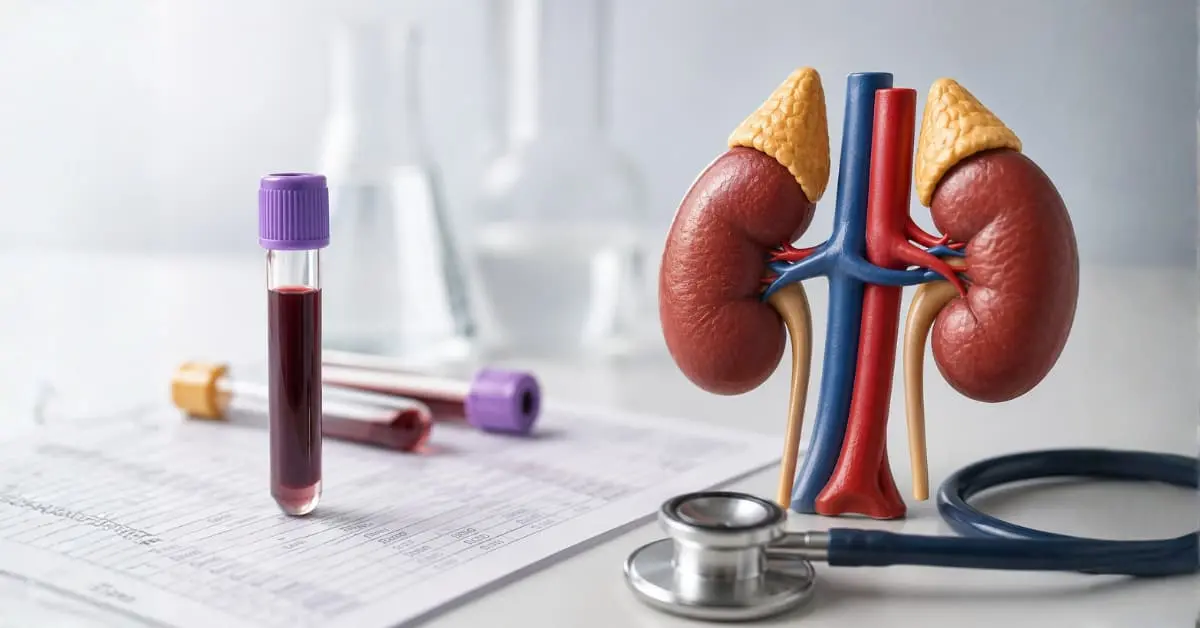
A routine blood test can sometimes reveal more than expected. Two numbers in particular sodium and potassium can provide an important clue when the body’s hormone system is not working as it should.
When blood work shows low sodium and high potassium, doctors may consider several possible causes. One of them is Addison’s disease, also known as primary adrenal insufficiency. It is a rare condition in which the adrenal glands cannot produce enough of certain essential hormones, particularly cortisol and, in many cases, aldosterone.
But why would a problem with the adrenal glands change the levels of minerals in the blood? And how do doctors move from an unusual electrolyte result to a possible diagnosis?
What Is Addison’s Disease?
The adrenal glands are small glands located above the kidneys. Despite their size, they play an important role in regulating several functions throughout the body.
One of their major hormones is cortisol, which helps the body respond to physical stress and contributes to maintaining blood pressure, blood glucose, and metabolism. Another is aldosterone, a hormone that helps regulate sodium, potassium, and fluid balance.
In Addison’s disease, damage to the adrenal glands reduces their ability to produce these hormones. Autoimmune destruction is a common cause, although infections, bleeding, cancer, certain medicines and other conditions can also affect the adrenal glands.
Because the condition can develop gradually, its symptoms may initially look like many other everyday health problems.
Fatigue, weakness, loss of appetite, weight loss, and abdominal discomfort can occur. Some people may also develop low blood pressure or darkening of the skin.
This is where laboratory testing becomes particularly valuable.
Why Does Sodium Become Low?
One of the classic laboratory findings associated with primary adrenal insufficiency is hyponatremia, meaning a lower-than-normal sodium concentration in the blood.
The connection begins with aldosterone.
Aldosterone helps the kidneys retain sodium while maintaining the appropriate balance of water and potassium. When aldosterone production falls, the kidneys lose more sodium. Changes in water regulation related to cortisol deficiency can also contribute to low sodium levels.
As a result, a person with Addison’s disease may have a blood test showing sodium below the laboratory reference range.
However, low sodium is extremely common and does not mean someone has Addison’s disease. Dehydration, medications, kidney problems, heart conditions, and several other disorders can also affect sodium levels.
The important point is that doctors interpret sodium alongside symptoms, medical history, and other laboratory findings.
Why Can Potassium Become High?
The other half of the pattern is hyperkalemia, or elevated potassium.
Aldosterone normally signals the kidneys to remove potassium through urine. When aldosterone is deficient, as can happen in primary adrenal insufficiency, potassium excretion can decrease.The result may be an increase in potassium in the bloodstream.This creates a potentially interesting laboratory combination:Low sodium + high potassium
When these abnormalities appear together, particularly alongside symptoms such as unexplained weakness, weight loss, low blood pressure, or other features of adrenal insufficiency, doctors may investigate whether the adrenal glands are functioning properly. The Endocrine Society specifically identifies unexplained hyponatremia and hyperkalemia among findings that should raise consideration of primary adrenal insufficiency in the appropriate clinical setting.
Is Low Sodium and High Potassium Enough to Diagnose Addison’s Disease?
No.
This is an important distinction when interpreting blood test results.
Electrolyte abnormalities can raise suspicion, but they cannot independently confirm Addison’s disease. A proper diagnosis requires evaluation of adrenal hormone function.
Doctors commonly assess cortisol and ACTH (adrenocorticotropic hormone). The pituitary gland produces ACTH and signals the adrenal glands to produce cortisol. In primary adrenal insufficiency, cortisol is low while ACTH is typically elevated because the pituitary is trying to stimulate poorly functioning adrenal glands.
A morning cortisol test may be part of the initial evaluation because cortisol levels naturally change throughout the day.
The ACTH Stimulation Test: Looking at the Adrenal Response
When adrenal insufficiency is suspected, one of the most important tests is the ACTH stimulation test, also called the corticotropin stimulation test.
Rather than simply measuring the amount of cortisol already circulating in the blood, this test asks a different question:
Can the adrenal glands respond when they are given an ACTH signal?
During the test, a synthetic form of ACTH is administered. Blood samples are collected before and after administration, and cortisol levels are measured. Healthy adrenal glands should respond by increasing cortisol production. In Addison’s disease, the response is typically inadequate.
The Endocrine Society recommends the standard-dose corticotropin stimulation test as the preferred confirmatory test when it can be performed safely and appropriately.
What Other Blood Tests May Be Used?
Once primary adrenal insufficiency is suspected or confirmed, additional testing can help determine what is happening and why.
Doctors may evaluate:
· ACTH to help distinguish primary adrenal insufficiency from forms caused by problems with the pituitary or hypothalamus.
· Renin and aldosterone to assess mineralocorticoid function.
· Sodium and potassium to evaluate electrolyte disturbances.
· 21-hydroxylase antibodies when autoimmune Addison’s disease is suspected.
· Glucose and other biochemical markers, depending on the patient’s symptoms and clinical situation.
Additional imaging or other investigations may sometimes be needed to identify the underlying cause.
Why This Blood-Test Pattern Matters
The combination of low sodium and high potassium is interesting because it connects a simple laboratory result to a much larger physiological process.
It demonstrates how blood testing can sometimes provide the first clue to a condition that might otherwise be difficult to recognize.
A patient may initially visit a doctor because of persistent fatigue or unexplained weakness. A routine metabolic panel might reveal an electrolyte imbalance. Instead of treating those numbers in isolation, the doctor considers the complete picture.
Low sodium. High potassium. Low cortisol. Elevated ACTH. An inadequate response to ACTH stimulation.
Together, these findings can tell a very different story from any single result alone.
The Bottom Line
A blood test cannot diagnose Addison’s disease simply because sodium is low and potassium is high. These findings have many possible explanations.
However, when unexplained hyponatremia and hyperkalemia occur alongside symptoms or other clinical signs suggestive of adrenal insufficiency, they can provide an important reason to investigate further. The diagnostic process may then move from routine electrolyte testing to cortisol and ACTH measurements, followed by an ACTH stimulation test when appropriate.
That is what makes this blood-test pattern so valuable: the numbers themselves are not the diagnosis. They are clues that can help doctors uncover what is happening inside the body.
This article is for educational purposes and should not be used to diagnose Addison’s disease or interpret an individual’s laboratory results. Blood test results should always be assessed by a qualified healthcare professional in the context of symptoms, medications, and medical history.
Author
-

Aachal Singh is a DHA-licensed registered nurse in Dubai, currently working with JPR Home Health Care. She brings precision and expertise in blood testing, laboratory procedures, and immunity-focused care, alongside her dedication to patient well-being at home.
She earned her nursing degree from Birat Health College and Research Centre, Biratnagar, Nepal (2023), and has been part of JPR Home Health Care since March 2025. In her role, Aachal conducts a wide range of diagnostic and preventive services, with a strong emphasis on accurate lab testing, early detection, and immune health support.
Her key areas of specialization include:
- Blood sample collection and lab test coordination
- Immunity-boosting therapies and preventive health care
- Post-operative care and recovery monitoring
- Chronic condition management with lab-based tracking
- General patient support at home
By combining technical expertise in diagnostics with compassionate care, Aachal ensures patients receive reliable, safe, and evidence-based services. She consistently follows DHA protocols and international nursing standards, keeping her practice aligned with the latest healthcare guidelines.
DHA License: 06652122-001
🔗 View DHA Profile
