

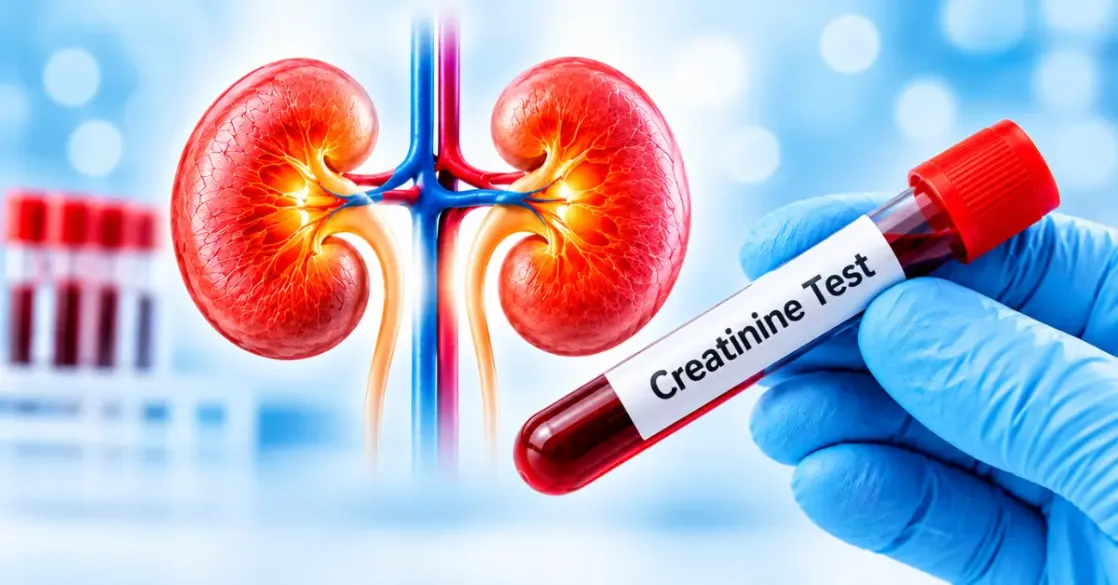
Your kidneys work quietly every day, filtering waste products, balancing fluids, and maintaining the chemical stability your body needs to function. Unlike many other organs, they rarely produce obvious warning signs when something begins to go wrong. This is one reason why routine kidney health assessments are so important.
One of the most commonly measured substances during a kidney assessment is creatinine. Although the name may sound complicated, creatinine is a natural waste product produced by your muscles. Its level in the bloodstream can provide valuable information about how effectively your kidneys are filtering waste.
But does a high creatinine result always mean kidney disease? Can normal creatinine levels guarantee healthy kidneys? Let’s understand what this marker actually tells us and why doctors consider it an important part of kidney health monitoring.
What Exactly Is Creatinine?
Creatinine is a waste substance created when your muscles naturally use creatine, a compound involved in producing energy for muscle activity.
Your body produces creatinine continuously, although the amount can vary depending on factors such as muscle mass, age, diet, and physical activity.
Once produced, creatinine enters the bloodstream and travels to the kidneys. Healthy kidneys filter most of it from the blood and remove it through urine.
Because the kidneys play a major role in eliminating creatinine, measuring its concentration in the blood helps healthcare professionals understand how well these organs are functioning.
In simple terms, creatinine acts as an important indicator of kidney filtration, although it should never be interpreted in isolation.
Why Do Doctors Recommend a Creatinine Blood Test?
A creatinine test is commonly included in routine health screenings and kidney function assessments. It can help doctors investigate possible kidney problems, monitor existing conditions, and evaluate changes in kidney function over time.
A healthcare professional may recommend this test for individuals who:
- Have diabetes or high blood pressure.
- Have a family history of kidney disease.
- Experience unexplained swelling in the feet or ankles.
- Have changes in their usual urination pattern.
- Take medications that may affect kidney function.
- Need regular monitoring of an existing kidney condition.
The test is also useful before or during certain medical treatments when understanding kidney function is important for treatment decisions.
An important point to remember is that kidney problems can develop without noticeable symptoms. Testing can sometimes identify changes before a person begins feeling unwell.
What Do High Creatinine Levels Mean?
When creatinine builds up in the bloodstream, it may indicate that the kidneys are not filtering waste as effectively as expected.
However, an elevated result does not automatically confirm kidney disease.
Several factors can temporarily influence creatinine levels, including:
- Recent intense physical exercise.
- Eating a large amount of cooked meat shortly before testing.
- Dehydration.
- Certain medications and supplements.
- Increased muscle mass.
- Acute illness or changes in kidney function.
If the result is higher than the laboratory’s reference range, a doctor may recommend repeating the test or investigating further.
Depending on the situation, additional assessments may include estimated glomerular filtration rate (eGFR), urine albumin testing, electrolyte measurements, and other kidney-related investigations.
The combination of these results provides a more meaningful picture than a single creatinine reading.
Can Low Creatinine Levels Also Be Important?
Most people associate creatinine testing with high results, but unusually low levels may also provide useful clinical information.
Lower creatinine concentrations can sometimes be associated with reduced muscle mass, ageing, poor nutritional status, or certain medical conditions.
For example, someone who has lost significant muscle mass may produce less creatinine than another person with a similar kidney filtration rate.
This is why doctors consider a patient’s age, physical condition, medical history, and other laboratory findings when interpreting results.
A low creatinine reading should not automatically be considered evidence of excellent kidney health.
Understanding eGFR: Another Important Kidney Health Indicator
Creatinine becomes even more useful when considered alongside estimated glomerular filtration rate, commonly known as eGFR.
Rather than simply measuring the amount of creatinine in the bloodstream, eGFR uses a calculation that generally considers creatinine, age, and sex to estimate how efficiently the kidneys filter blood.
For many adults, an eGFR of 90 or above is generally within the expected range. However, a higher result does not necessarily rule out kidney disease, particularly when other signs of kidney damage are present.
An eGFR below 60 that persists for at least three months may indicate chronic kidney disease. Doctors also consider urine albumin levels and other clinical findings before making a diagnosis.
Understanding both creatinine and eGFR helps healthcare professionals assess kidney function more accurately and identify people who may need further investigation.
What Other Tests Help Evaluate Kidney Health?
Creatinine is important, but it is not the only marker used to assess kidney function.
A comprehensive kidney evaluation may include several tests:
Blood Urea: Measures urea, a waste product formed when the body breaks down proteins. Increased levels may occur when kidney function is reduced, although other factors can also influence the result.
Blood Urea Nitrogen (BUN): Measures the nitrogen component of urea and provides additional information about waste levels in the bloodstream.
Electrolyte Testing: Checks substances such as sodium and potassium, which help regulate fluid balance, nerve activity, and muscle function.
Urine Albumin-to-Creatinine Ratio (uACR): Detects small amounts of albumin in urine, which may indicate kidney damage.
Complete Kidney Function Assessment: Combines relevant blood and urine investigations to help doctors understand kidney performance and identify possible abnormalities.
The appropriate tests depend on individual symptoms, medical history, and clinical requirements.
How Can You Prepare for a Creatinine Blood Test?
Preparing correctly for laboratory testing helps improve the reliability of your results.
Although a creatinine blood test usually does not require fasting on its own, your doctor may recommend fasting if other tests are being performed at the same appointment.
Before your test, consider these practical points:
- Drink your usual amount of water unless your doctor has advised fluid restriction.
- Avoid unusually intense exercise shortly before testing.
- Inform your healthcare professional about medications and supplements you take.
- Mention any recent illness or dehydration.
- Follow any specific preparation instructions provided by your laboratory.
Do not stop prescribed medicines without consulting your doctor.
Making Kidney Health Monitoring More Convenient in Dubai
Busy work schedules and daily responsibilities can sometimes make routine health appointments difficult to arrange. However, convenient access to laboratory testing can make it easier for individuals to stay informed about their health.
With professional blood collection at home in Dubai, patients can arrange sample collection at their preferred location, subject to the laboratory’s availability and service arrangements.
For individuals who require ongoing kidney monitoring, a Kidney Function test at home in Dubai can also provide a convenient way to complete recommended laboratory investigations without travelling to a diagnostic centre.
The important consideration is not simply where the sample is collected, but whether the testing process follows appropriate laboratory standards and whether the results are reviewed by a qualified healthcare professional.
Simple Habits That Support Kidney Health
Although no lifestyle change can guarantee protection against kidney disease, certain habits can help maintain overall health and reduce some risk factors.
- Maintain healthy blood pressure levels.
- Keep blood sugar under control if you have diabetes.
- Drink appropriate amounts of water according to your health needs.
- Follow a balanced diet with suitable salt intake.
- Stay physically active.
- Avoid unnecessary use of painkillers, particularly non-steroidal anti-inflammatory drugs (NSAIDs).
- Attend recommended health screenings.
People with existing kidney or heart conditions should follow individualised dietary and fluid recommendations from their healthcare team.
Conclusion
Creatinine may be a small waste product, but the information it provides can play an important role in understanding kidney health. Its concentration in the bloodstream helps doctors evaluate kidney filtration, investigate possible abnormalities, and monitor changes over time.
However, one number cannot tell the entire story. Creatinine should be interpreted alongside eGFR, urine albumin measurements, medical history, and other relevant findings.
Taking an active interest in kidney health does not mean waiting until symptoms appear. Appropriate screening, healthy daily habits, and timely medical advice can help you make informed decisions about your well-being.
Your kidneys work continuously to keep your body balanced. Giving them the attention they deserve is an important step towards long-term health.
Author
-

Aachal Singh is a DHA-licensed registered nurse in Dubai, currently working with JPR Home Health Care. She brings precision and expertise in blood testing, laboratory procedures, and immunity-focused care, alongside her dedication to patient well-being at home.
She earned her nursing degree from Birat Health College and Research Centre, Biratnagar, Nepal (2023), and has been part of JPR Home Health Care since March 2025. In her role, Aachal conducts a wide range of diagnostic and preventive services, with a strong emphasis on accurate lab testing, early detection, and immune health support.
Her key areas of specialization include:
- Blood sample collection and lab test coordination
- Immunity-boosting therapies and preventive health care
- Post-operative care and recovery monitoring
- Chronic condition management with lab-based tracking
- General patient support at home
By combining technical expertise in diagnostics with compassionate care, Aachal ensures patients receive reliable, safe, and evidence-based services. She consistently follows DHA protocols and international nursing standards, keeping her practice aligned with the latest healthcare guidelines.
DHA License: 06652122-001
🔗 View DHA Profile
