
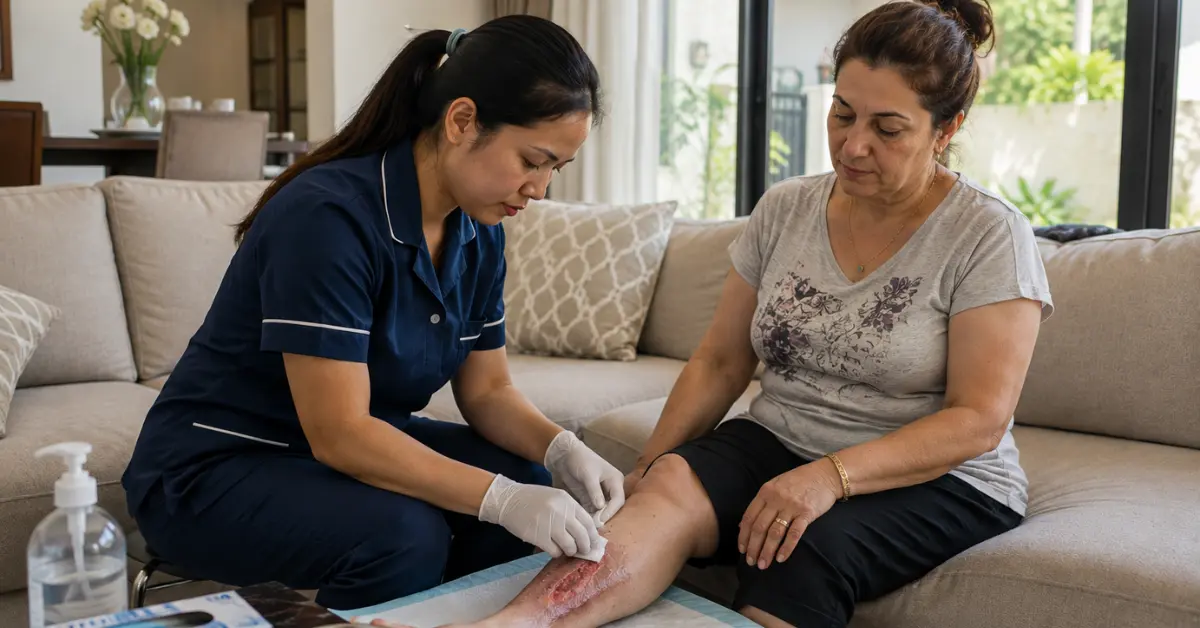
A venous leg ulcer is more than just a wound that refuses to heal. It is often a sign of an underlying circulation problem known as chronic venous insufficiency, where blood struggles to return efficiently from the legs to the heart. Without proper care, these wounds can persist for months, increasing the risk of infection, discomfort, and reduced mobility.
Professional home nursing provides a safe and effective solution by delivering comprehensive wound care, regular monitoring, and patient education in the comfort of your home. Rather than treating only the wound, home nurses focus on improving the patient’s overall health and addressing the underlying cause of delayed healing. This approach is consistent with the assessment and treatment principles described in the source case study.
Understanding Venous Leg Ulcers
Venous leg ulcers usually develop when the veins in the legs cannot efficiently return blood to the heart. This causes increased pressure within the veins, leading to swelling, skin changes, and eventually an open wound.
These ulcers commonly:
- Develop on the lower leg, especially around the ankle.
- Heal slowly without proper treatment.
- Produce moderate wound drainage.
- Cause swelling and mild pain.
- May recur if the underlying venous disease is not managed.
Why Home Nursing Is Important
Managing a venous leg ulcer requires much more than changing a dressing. Home nurses assess the patient’s entire condition, including circulation, mobility, nutrition, pain, and lifestyle factors that influence healing.
By receiving care at home, patients benefit from:
- Regular wound assessment
- Professional dressing changes
- Compression therapy monitoring
- Infection surveillance
- Education for patients and caregivers
- Ongoing evaluation of healing progress
This holistic approach helps identify problems early while supporting faster and safer recovery.
Initial Assessment by a Home Nurse
The first home nursing visit involves a detailed assessment before any treatment begins.
The nurse evaluates:
- Medical history
- Existing health conditions such as diabetes or hypertension
- Lifestyle habits
- Mobility level
- Nutritional status
- Pain level
- Swelling around the affected leg
- Wound size, depth, drainage, and tissue appearance
- Signs of infection
For lower-leg wounds, circulation assessment is particularly important. The case study highlights the importance of confirming adequate blood flow before compression therapy is introduced.
Professional Wound Care at Home
After assessment, the nurse develops an individualized wound care plan.
Home nursing wound care may include:
Gentle Wound Cleansing
The wound is carefully cleaned using appropriate solutions to remove debris while protecting healthy tissue.
Dressing Selection
No single dressing is suitable for every wound.
The nurse selects dressings based on:
- Amount of wound drainage
- Presence of healthy tissue
- Slough or dead tissue
- Moisture balance
- Healing progress
Maintaining the correct moisture level helps create an environment where new tissue can grow effectively. Dressing selection is adjusted throughout treatment as healing progresses.
Debridement Support
When non-viable tissue is present, the nurse may use appropriate dressing-based methods or coordinate additional treatment when necessary to encourage healthy tissue growth.
Compression Therapy: A Key Part of Healing
Compression therapy is often one of the most important treatments for venous leg ulcers.
Special compression bandages or stockings help:
- Improve blood circulation
- Reduce swelling
- Prevent fluid accumulation
- Support faster wound healing
Patients with chronic venous insufficiency usually require ongoing compression therapy even after the wound heals to reduce the risk of recurrence. Home nurses educate patients about proper use and encourage long-term adherence.
Monitoring for Infection
Not every wound requires antibiotics.
During each visit, home nurses carefully monitor for changes such as:
- Increased redness
- Excess warmth
- Swelling
- Increased pain
- Excess drainage
- New or worsening odor
- Delayed healing
If infection is suspected, the nurse communicates with the treating physician so that appropriate investigations and treatment can be arranged. The source emphasizes treating infection only when clinical signs support it rather than using antimicrobial products routinely.
Pain Management
Venous leg ulcers may cause mild to moderate discomfort.
Home nurses assess pain during every visit and help patients manage symptoms through:
- Proper wound handling
- Dressing techniques that minimize discomfort
- Positioning strategies
- Guidance on physician-recommended pain medications
- Regular reassessment of pain levels
Lifestyle Support That Improves Healing
Successful healing depends on much more than wound care alone.
Home nurses encourage healthy habits including:
- Maintaining good blood sugar control
- Eating a balanced diet
- Reducing excessive sodium intake
- Staying physically active when appropriate
- Elevating the legs while sitting
- Following compression therapy consistently
These lifestyle measures improve circulation and support long-term recovery.
Patient and Caregiver Education
Education is one of the most valuable parts of home nursing.
Nurses teach patients and family members:
- How to recognize warning signs
- Safe skin care techniques
- Proper use of compression garments
- Daily foot and leg inspection
- Importance of attending follow-up appointments
- Ways to prevent future ulcers
When patients understand their condition, they are more likely to follow treatment recommendations and maintain healing after recovery.
Benefits of Home Nursing for Venous Leg Ulcers
Receiving professional wound care at home offers several advantages:
- Personalized treatment plans
- Reduced hospital and clinic visits
- Regular monitoring of healing
- Early identification of complications
- Better patient comfort
- Family education and support
- Continuity of care
- Improved quality of life
Healing a venous leg ulcer requires more than simply covering the wound. Successful treatment involves addressing the underlying circulation problem, selecting appropriate dressings, monitoring for infection, managing swelling, and supporting healthy lifestyle habits.
Home nursing at home for venous leg ulcers brings all of these elements together in one coordinated care plan. Through regular assessments, skilled wound care, compression therapy support, and ongoing education, professional nurses help patients heal safely while reducing the risk of future ulcers. By choosing home nursing at home for venous leg ulcers, patients receive personalized, evidence-based care in the comfort of their own homes, improving healing outcomes while minimizing the need for frequent hospital or clinic visits.
Author
-

Sony Thapa is a DHA-licensed registered nurse in Dubai, currently serving as a dedicated home care nurse with JPR Home Health Care. She specializes in elderly care, offering compassionate, respectful, and patient-centered nursing support to seniors in the comfort of their homes.
Originally from Nepal, Sony completed her Diploma in Nursing in Kathmandu in 2016. With nearly a decade of hands-on experience and a strong grounding in geriatric care, she joined JPR Home Health Care in March 2025 and quickly became a trusted presence among families seeking dependable care for aging loved ones.
Sony’s expertise includes assisting with daily living activities, chronic disease monitoring, post-hospital rehabilitation, medication management, and fall prevention. Her calm demeanor and gentle communication style make her especially effective with seniors who may be coping with dementia, mobility challenges, or emotional vulnerability.
She follows strict DHA guidelines while bringing a deeply human touch to every patient interaction, always ensuring safety, hygiene, and dignity come first. For families navigating the complexities of elderly care at home, Sony provides both peace of mind and professional excellence.
DHA License
License Number: 98504622-001
DHA Profile: https://services.dha.gov.ae/sheryan/wps/portal/home/medical-directory/professional-details?dhaUniqueId=98504622
