

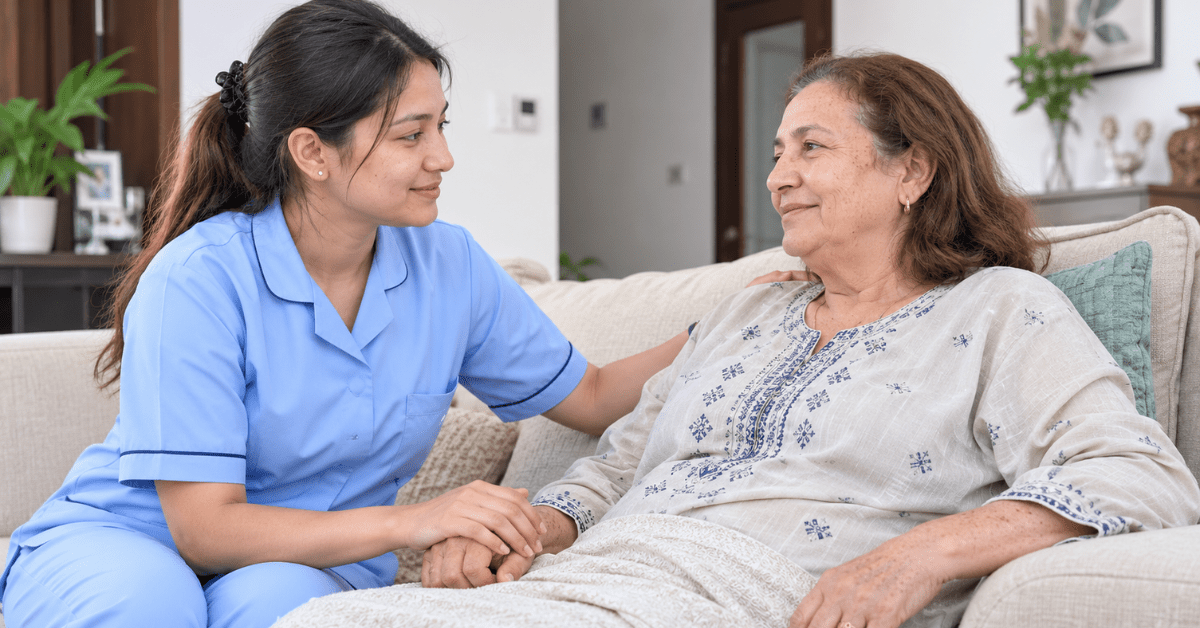
I’ve spent years caring for older adults, both in hospitals and in their own homes, and osteoporosis is one of the conditions that worries me most when a family tries to manage it alone. It’s often called a “silent” disease because there’s no dramatic moment that announces it. There’s just a slow, quiet weakening of the bones until one day, a small stumble turns into a fracture that changes everything.
Families ask me all the time whether they really need outside help for a parent with osteoporosis, or whether love and attentiveness are enough. I want to answer that honestly, the way I would if you were sitting across from me in a patient’s living room. So let’s go through it as a Q&A, because that’s how most families are actually thinking about this.
“What exactly is happening inside my parent’s bones?”
Osteoporosis means the bones have become porous and fragile, almost like they’ve developed small holes throughout the bone tissue. This happens when bone is broken down faster than the body can rebuild it, so bone density drops and the skeleton becomes far more brittle than it should be. It’s not something you can see from the outside until a fracture or a change in posture makes it obvious.
Many families don’t realize that this process often starts well before any diagnosis. By the time a fracture happens, the bone has usually been weakening for years.
“Why is my parent especially at risk?”
Several factors raise the risk significantly, and understanding them helps explain why professional oversight matters so much. Women, particularly after menopause, face a much higher risk because the drop in estrogen speeds up bone loss. Age itself is a major factor, and so is body type, since a thinner frame generally means less bone mass to begin with. Long term use of certain medications, including steroids, can also weaken bone over time. Low calcium or vitamin D intake, a lack of weight bearing activity, smoking, heavy alcohol use, and excess caffeine all add to the risk as well.
When I meet a family caring for a parent who fits several of these risk factors, I know we’re not just managing a diagnosis. We’re managing a genuinely fragile situation that needs consistent, informed attention every single day.
“Isn’t it enough for us to just be careful around the house?”
Being careful is a good start, but it isn’t the same as knowing what to actually watch for. A trained caregiver isn’t just being cautious. They’re actively looking for warning signs that most families wouldn’t recognize, like a gradual loss of height, a rounding of the upper back known as kyphosis, or subtle changes in gait that signal the body is compensating for weakness or pain.
I’ve seen families who were incredibly attentive still miss these signs simply because they didn’t know what they were looking for. That’s not a failure of love. It’s a gap in training, and it’s exactly the gap an elderly care expert is meant to fill.
“What does a caregiver actually do differently for someone with osteoporosis?”
A lot of my work with osteoporosis patients is about preventing the fracture before it ever happens. That means:
Making the home genuinely fall proof, not just tidy. That includes removing loose rugs, adding rubber mats in the shower, and making sure pathways are clear and well lit.
Encouraging safe weight bearing movement, like short supported walks, rather than letting fear of falling lead to inactivity, which actually weakens bones and muscles further.
Supporting proper nutrition, including calcium and vitamin D, and encouraging safe, brief sun exposure, since vitamin D helps the body absorb calcium properly.
Managing medications correctly, including understanding that calcium supplements are typically taken in smaller divided doses rather than one large dose, since the body doesn’t absorb large amounts well at once, and knowing that mild constipation is a common and expected side effect that simply needs more fluids and movement, not panic.
Watching for interactions with other medications, and understanding that certain drugs, including some steroids and long term anti-seizure medications, can quietly make bone loss worse over time.
None of this requires guesswork. It requires someone who already knows the pattern and is watching for it every day, not just during the moments when something already looks wrong.
“How do I know if it’s time to bring in professional help?”
I ask families to be honest with themselves. Has there already been a fall, even a minor one? Has your parent started avoiding walking because they’re afraid of falling, which ironically makes their bones and muscles weaker? Are you unsure whether you’re managing their calcium, vitamin D, or medications correctly? Are you constantly anxious when you’re not in the room with them?
If any of that sounds familiar, it’s not a sign that you’ve failed as a caregiver. It’s a sign the situation has grown beyond what one person, however devoted, can safely manage alone. Osteoporosis in particular doesn’t forgive small mistakes the way some other conditions might. One missed precaution can lead to a fracture, and a fracture in an elderly person often leads to a hospital stay, a loss of independence, and a much longer road back.
“What does day to day care actually look like?”
It’s quieter than people expect, and that’s exactly the point. A skilled elderly care expert isn’t waiting for an emergency. They’re preventing it. A typical day might include helping with safe movement around the home, encouraging gentle activity suited to what the body can handle that day, making sure medications and supplements are taken correctly and on schedule, checking in on posture, gait, and any new pain, and simply being present so a fall doesn’t happen while no one is watching.
It’s steady, unglamorous, attentive work. But that steadiness is exactly what prevents the frightening, life altering events that families dread most.
“Is it safe to trust someone else with this kind of care?”
It should be, as long as you choose carefully. Look for a caregiver or agency with real training in elderly care and fall prevention, verified background checks, and specific experience with bone health and mobility issues. Ask how they would handle an emergency. Ask how they communicate with you day to day. A caregiver worth trusting will welcome those questions rather than avoid them.
The right caregiver doesn’t take your place in your parent’s life. They take on the clinical vigilance so you can go back to simply being their daughter, son, or spouse, instead of also being their full time nurse, pharmacist, and physical therapist.
The bottom line
Osteoporosis rarely announces itself loudly. It waits quietly until a small accident becomes a major turning point. I’ve never met a family who brought in professional elderly care for a parent with serious osteoporosis and regretted having that extra layer of protection. I have met far too many who wished they’d brought in help before the fracture happened, not after.
You don’t have to wait for a fall to ask for support. Bringing in an elderly care expert means someone with the right training is watching for the small warning signs every single day, so your parent can stay steady, supported, and safely at home for as long as possible.
Author
-

Sony Thapa is a DHA-licensed registered nurse in Dubai, currently serving as a dedicated home care nurse with JPR Home Health Care. She specializes in elderly care, offering compassionate, respectful, and patient-centered nursing support to seniors in the comfort of their homes.
Originally from Nepal, Sony completed her Diploma in Nursing in Kathmandu in 2016. With nearly a decade of hands-on experience and a strong grounding in geriatric care, she joined JPR Home Health Care in March 2025 and quickly became a trusted presence among families seeking dependable care for aging loved ones.
Sony’s expertise includes assisting with daily living activities, chronic disease monitoring, post-hospital rehabilitation, medication management, and fall prevention. Her calm demeanor and gentle communication style make her especially effective with seniors who may be coping with dementia, mobility challenges, or emotional vulnerability.
She follows strict DHA guidelines while bringing a deeply human touch to every patient interaction, always ensuring safety, hygiene, and dignity come first. For families navigating the complexities of elderly care at home, Sony provides both peace of mind and professional excellence.
DHA License
License Number: 98504622-001
DHA Profile: https://services.dha.gov.ae/sheryan/wps/portal/home/medical-directory/professional-details?dhaUniqueId=98504622
