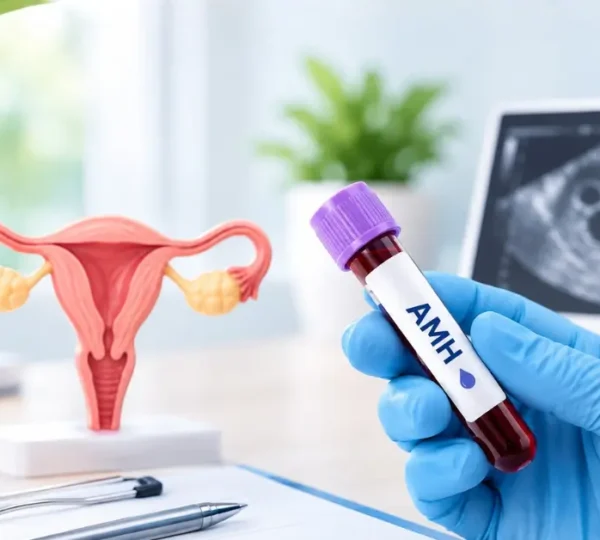
When it comes to fertility and reproductive health, understanding your body’s hormone levels can provide valuable insights. One of the most important fertility-related blood tests available today is the AMH test. Whether you are planning to start a family, experiencing difficulty conceiving, or want to learn more about your reproductive health, an Anti-Müllerian Hormone (AMH) test can offer useful information about your ovarian reserve.
In this article, we’ll explain what an AMH test is, how it works, why it is important, and who should consider getting tested.
What Is an AMH Test?
An AMH (Anti-Müllerian Hormone) test is a blood test that measures the level of Anti-Müllerian Hormone in your body. In women, AMH is produced by small follicles in the ovaries, which contain immature eggs.
Because AMH levels are linked to the number of remaining eggs, the test is commonly used to evaluate a woman’s ovarian reserve, the quantity of eggs left in the ovaries. While the test does not determine the quality of eggs or predict the exact chances of pregnancy, it can provide important information about fertility potential.
Unlike some other reproductive hormones, AMH levels remain relatively stable throughout the menstrual cycle, making the test convenient to perform at almost any time of the month.
Why Is the AMH Test Important?
The AMH test has become an essential tool in fertility assessment because it helps healthcare providers better understand a woman’s reproductive health.
1. Evaluates Ovarian Reserve
One of the primary purposes of an AMH test is to assess ovarian reserve. Women are born with a finite number of eggs, and this number naturally declines with age.
Higher AMH levels generally indicate a larger egg supply, while lower levels may suggest a reduced ovarian reserve. Understanding ovarian reserve can help individuals make informed decisions about family planning and fertility treatments.
2. Supports Fertility Planning
Many women today choose to delay pregnancy due to career goals, education, financial considerations, or personal reasons. An AMH test can provide valuable insight into fertility status and help with future family planning.
Knowing your AMH level may allow you to discuss options such as egg freezing or fertility preservation with your healthcare provider if necessary.
3. Assists Fertility Treatment Decisions
For women undergoing fertility treatments such as IVF (In Vitro Fertilization), AMH testing is often part of the initial fertility evaluation.
AMH levels can help fertility specialists estimate how the ovaries may respond to stimulation medications. This information allows healthcare providers to create more personalized treatment plans and optimize outcomes.
4. Helps Diagnose Certain Conditions
An AMH test may also help identify or monitor certain reproductive health conditions, including:
· Polycystic Ovary Syndrome (PMOS)
· Premature ovarian insufficiency
· Early menopause
· Ovarian dysfunction
Women with PCOS often have higher-than-normal AMH levels because they tend to have a larger number of small ovarian follicles.
Who Should Consider an AMH Test?
An AMH blood test may be beneficial for:
· Women trying to conceive
· Women experiencing infertility
· Individuals considering egg freezing
· Women with irregular menstrual cycles
· Those with a family history of early menopause
· Women diagnosed with PCOS
· Individuals planning fertility treatments such as IVF
· Women who want to understand their reproductive health better
Even if you are not actively trying to become pregnant, understanding your ovarian reserve can help you make informed healthcare decisions.
How Is an AMH Test Performed?
The AMH test is simple, quick, and minimally invasive.
During the procedure:
1st A healthcare professional collects a small blood sample from a vein in your arm.
2nd The sample is sent to a laboratory for analysis.
3rd Results are typically available within a few days, depending on the laboratory.
Many healthcare providers now offer home blood collection services, allowing patients to have their samples collected in the comfort of their own homes without visiting a clinic or laboratory.
Understanding AMH Test Results
AMH levels are usually measured in nanograms per milliliter (ng/mL) or picomoles per liter (pmol/L).
In general:
· Higher AMH levels may indicate a larger ovarian reserve.
· Lower AMH levels may suggest a reduced ovarian reserve.
· Extremely high AMH levels may be associated with PCOS.
However, AMH results should never be interpreted in isolation. Age, medical history, menstrual patterns, ultrasound findings, and other hormone tests all play important roles in evaluating fertility.
It is important to discuss your results with a qualified healthcare professional who can provide personalized guidance based on your overall health profile.
Factors That Can Affect AMH Levels
Several factors can influence AMH levels, including:
Age
Age is the most significant factor affecting AMH levels. As women get older, the number of eggs in the ovaries naturally decreases, causing AMH levels to decline.
Medical Conditions
Conditions such as PCOS may lead to elevated AMH levels, while premature ovarian insufficiency can cause lower levels.
Ovarian Surgery
Previous ovarian surgery may reduce ovarian reserve and impact AMH measurements.
Cancer Treatments
Chemotherapy and radiation therapy can affect ovarian function and may lower AMH levels.
Understanding these factors helps healthcare providers interpret AMH results more accurately.
Limitations of the AMH Test
While the AMH test provides valuable information, it is important to understand its limitations.
The test cannot:
· Predict the exact ability to become pregnant
· Determine egg quality
· Guarantee future fertility outcomes
· Confirm infertility on its own
A woman with low AMH may still conceive naturally, while someone with high AMH may experience fertility challenges. For this reason, AMH testing is best used as part of a comprehensive fertility assessment.
Benefits of Home AMH Testing Services
As healthcare becomes more accessible, many individuals are choosing home blood testing services for hormone assessments.
Benefits include:
· Greater convenience
· Reduced travel time
· Comfortable sample collection at home
· Flexible scheduling
· Faster access to fertility screening
Home blood collection services make it easier for individuals to prioritize their reproductive health without disrupting their daily routines.
Conclusion
The AMH test is a valuable tool for assessing ovarian reserve and gaining insight into reproductive health. Whether you are planning for pregnancy, exploring fertility treatment options, or simply seeking a better understanding of your body, AMH testing can provide important information that supports informed decision-making.
While AMH levels do not tell the entire fertility story, they offer a useful snapshot of ovarian reserve and can help guide conversations with healthcare professionals. Combined with expert medical advice and other fertility assessments, an AMH test can play a key role in proactive reproductive health planning.
If you’re considering fertility screening, an AMH blood test is a simple and effective first step toward understanding your reproductive future.
Looking to assess your ovarian reserve and fertility health? Our AMH Test provides accurate hormone analysis to help you better understand your reproductive health. Book your test today.