

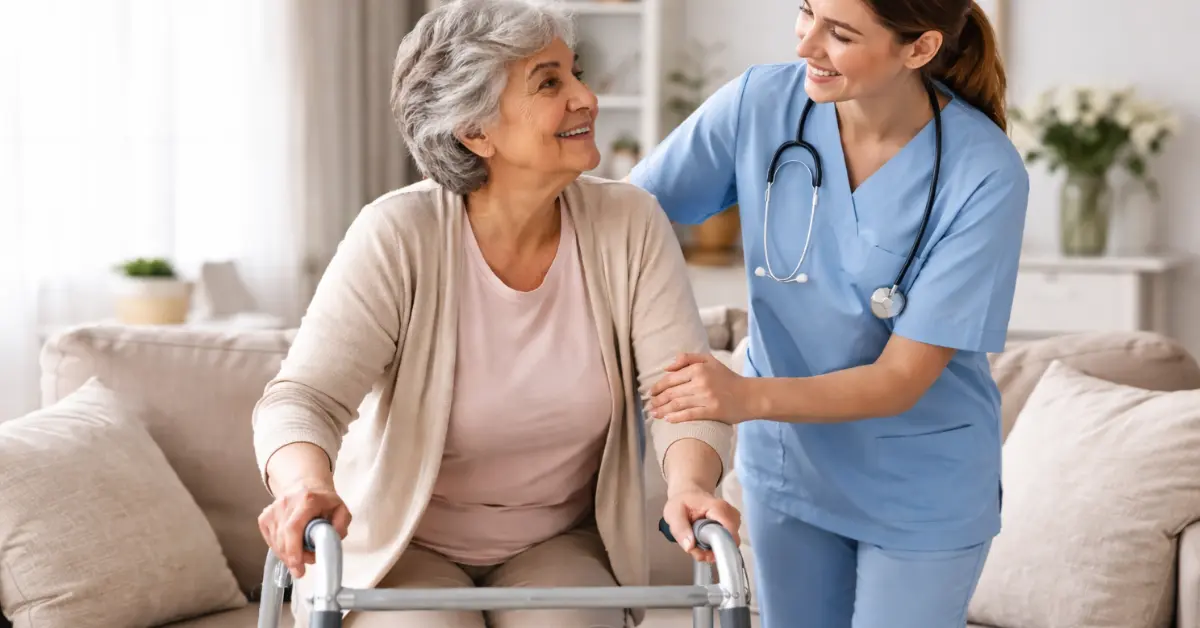
It often starts with something small.
A hesitation before stepping off the curb. A hand gripping the wall for balance. A quiet admission: “I don’t feel as steady as I used to.”
If someone you love is moving differently, more cautiously, more slowly, it’s natural to wonder what’s happening. Is it just aging? Or something deeper?
Mobility challenges commonly stem from three major causes: arthritis, stroke, and muscle weakness. Each affects the body differently. But all can significantly reduce independence, and all benefit from structured, professional support.
Arthritis: When Pain Restricts Movement
Arthritis is more than occasional joint stiffness. According to the Mayo Clinic, osteoarthritis develops when cartilage gradually breaks down, causing inflammation, pain, and limited joint motion.
Over time, this can lead to:
- Reduced walking tolerance
- Difficulty climbing stairs
- Joint swelling and morning stiffness
- Avoidance of movement due to discomfort
Here’s the complication: when movement decreases, muscle strength declines. That weakness increases instability. And instability increases fall risk.
The Cleveland Clinic emphasizes that supervised strengthening and low-impact activity can significantly improve joint function and reduce pain. The key is structured progression, not random exercise.
Through home healthcare services in Dubai, patients can receive guided mobility support, medication monitoring, and pain management within the safety of their own home.
Stroke: When the Brain Affects the Body
A stroke disrupts blood flow to the brain, often impairing muscle coordination and balance. The World Health Organization explains that stroke is a leading cause of long-term disability worldwide.
Mobility issues after stroke may include:
- Weakness on one side of the body
- Difficulty standing independently
- Poor balance
- Spastic or rigid muscles
- Increased fall risk
Recovery doesn’t stop at hospital discharge. Neuroplasticity, the brain’s ability to reorganize, continues with consistent, repetitive training.
This is where medical care at home in Dubai becomes especially valuable. Instead of repeated hospital visits, rehabilitation exercises, gait training, medication supervision, and vital monitoring can happen in a familiar environment.
For many families, having a nurse at home dubai reduces anxiety. Clinical oversight continues, but the emotional comfort of home remains intact.
Muscle Weakness: The Overlooked Factor
Muscle weakness is often underestimated. It can result from prolonged bed rest, chronic illness, poor nutrition, or aging-related sarcopenia.
Even short periods of inactivity can lead to measurable strength loss. According to research referenced by the Mayo Clinic, older adults lose muscle mass more quickly during illness or immobility.
Signs include:
- Slower walking speed
- Fatigue after minimal effort
- Trouble rising from a chair
- Increased reliance on support surfaces
The encouraging truth? Muscle strength can often be rebuilt safely with guided intervention. Through structured home nursing services in dubai, patients receive supervised exercises, fall-prevention strategies, and continuous health monitoring.
Why Home-Based Medical Support Matters
Mobility challenges are not purely physical. They affect confidence, mood, and daily independence.
Hospitals provide acute treatment. But long-term mobility recovery often requires consistency, something best achieved at home.
With comprehensive home healthcare services Dubai, patients may receive:
- Post-surgical wound care
- IV therapy and medication management
- Oxygen and respiratory monitoring
- Fall-risk assessments
- Chronic disease management
- Vital sign tracking
- Mobility and transfer assistance
This is not basic caregiving. It is structured, professional medical care at home Dubai, delivered by licensed nurses trained to recognize early warning signs and prevent complications.
When families partner with experienced providers offering home nursing services in dubai, they gain both clinical precision and emotional reassurance.
Safety First: When to Seek Professional Help
Consider arranging structured support if you notice:
- Repeated near-falls
- One-sided weakness
- Persistent joint swelling
- Confusion with medications
- Increasing dependence for daily activities
Early intervention often prevents hospital readmissions. It also preserves dignity.
A nurse at home dubai can monitor recovery progress, adjust care routines, and communicate changes to physicians when necessary. That continuity protects outcomes.
Practical Steps You Can Take Today
If mobility is declining:
- Request a medical evaluation to identify the cause.
- Conduct a home safety review (remove loose rugs, improve lighting, install grab bars).
- Ask about structured exercise programs appropriate for the condition.
- Explore medical care at home Dubai for supervised recovery.
- Ensure medication schedules are clearly organized and monitored.
Small adjustments, consistently applied, often produce meaningful improvement.
The Takeaway
Arthritis restricts joints. Stroke disrupts neurological control. Muscle weakness reduces strength. But mobility loss is not inevitable, and it is rarely hopeless.
With timely intervention, guided rehabilitation, and professional home healthcare services in Dubai, patients can often regain stability, confidence, and independence.
If someone you care about is moving with hesitation or fear, don’t wait for a fall to create urgency. Ask questions. Seek structured support. Explore home nursing services in dubai that combine medical oversight with compassionate care.
Because mobility isn’t just about walking across a room.
It’s about preserving autonomy, one safe step at a time.
Author
-

Shanta Chaudhary is a DHA-licensed registered nurse based in Dubai, currently delivering compassionate and professional home nursing services with JPR Home Health Care. She is dedicated to providing personalized care that supports patients’ recovery and wellbeing in the comfort of their own homes.
Originally from Nepal, Shanta graduated from Hamro School of Nursing in Biratnagar in 2019. Since joining JPR Home Health Care in June 2025, she has been actively involved in a variety of home care services including medication management, wound care, vital signs monitoring, and assisting with daily living activities.
Her attentive and patient-centered approach helps ease the challenges faced by patients recovering from surgery, managing chronic conditions, or requiring ongoing nursing support. Shanta ensures each care plan is followed meticulously, prioritizing safety, hygiene, and comfort in every visit.
By adhering to DHA guidelines and best practices, Shanta consistently provides reliable, high-quality nursing care that promotes healing and independence at home.
DHA License
License Number: 07586284-001
DHA Profile: https://services.dha.gov.ae/sheryan/wps/portal/home/medical-directory/professional-details?dhaUniqueId=07586284
