
Hydration sounds like the simplest health topic on the planet, but in older adults it becomes this quiet troublemaker. One of those issues that creeps in slowly, shows barely any warning signs, then suddenly everything feels off. Families often assume dehydration only happens during heat waves or illness, but research says otherwise. In fact, the Journal of Gerontology notes that older adults have a higher risk of fluid imbalance even during ordinary days when nothing special is happening.
I have seen it again and again. A senior who “feels fine” in the morning ends up dizzy or confused by evening. And the sad part is that most of it could have been prevented with a little more fluid earlier in the day.
Why Hydration Drops Off With Age
The reasons are not dramatic, but they stack up.
1. The thirst reflex wears out with age
The brain simply becomes less responsive. According to the National Institute on Aging (NIA), older adults often experience reduced thirst even when their bodies are already low on fluids. Imagine running low on fuel without a dashboard light to warn you. That is what happens.
2. Medications quietly shift fluid levels
Blood pressure drugs, diuretics, and some heart meds increase urine output. Mayo Clinic confirms this and warns caregivers to pay attention to hydration on days when doses change or when temperatures rise. It is not the medication being “bad”. It is just physiology doing its thing.
3. Muscle stores water, and muscle shrinks with age
Less muscle means fewer internal water reserves. The European Hydration Institute has pointed this out in several reviews. Even mild dehydration hits harder when your natural storage tank is smaller.
4. Chronic conditions add another layer
Diabetes, heart failure, and kidney disease can shift fluid balance faster than expected. Seniors with these conditions need a more watchful hydration routine, not because they are fragile, but because their bodies are juggling more tasks behind the scenes.
5. Daily barriers get in the way
Some older adults drink less simply because walking to the bathroom is tiring. Others forget. Some just dislike the taste of plain water and will not say it out loud. These everyday details matter more than people realize.
Signs That Hydration Is Slipping
The signs do not always scream for attention. In fact, dehydration in seniors is sneaky.
Dry mouth, darker urine, fatigue, mild confusion, headaches, constipation. Even a bit of irritability. The Cleveland Clinic says that cognitive changes are often one of the earliest clues, which many families mistake for “old age” when the problem is actually fluids.
Practical and Realistic Ways to Improve Hydration
You do not need fancy machines or exotic electrolytes. Just a few adjustments that actually stick.
Offer small amounts often, not large cups all at once
A full glass can feel overwhelming. A few sips every hour is easier and more natural.
Make drinks more appealing
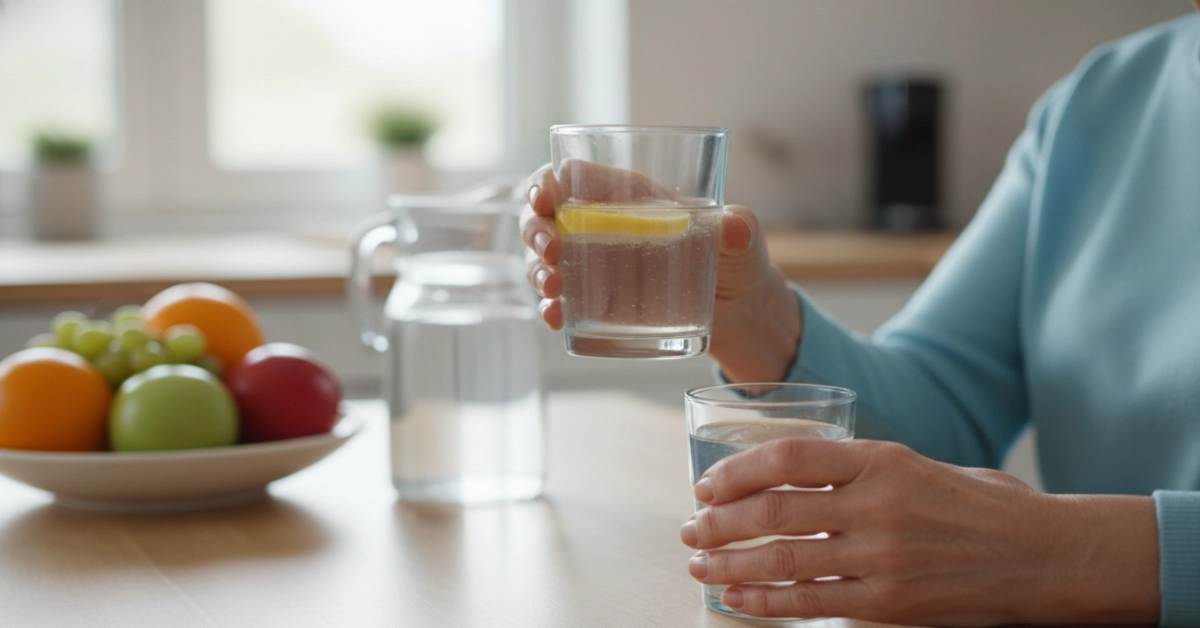
Infused water with mint or lemon, warm herbal teas, lightly flavored electrolyte drinks when medically appropriate. Variety encourages drinking without feeling like a chore.
Use water rich foods as allies
Watermelon, oranges, cucumber, tomatoes, broth based soups. The NIA lists these foods as legitimate hydration contributors, not just snacks.
Tie drinking to daily habits
A sip after brushing teeth. Another after medications. One during TV shows. Pairing hydration with routines helps seniors who forget.
Choose the right temperature
Some people drink twice as much when beverages match their comfort zone, whether that is icy or warm. It is a small tweak that works surprisingly well.
Watch caffeine and sugary drinks
No need to ban them, but do not let them take over. Caffeine has a mild diuretic effect according to Johns Hopkins Medicine, though it becomes an issue only when intake is high.
When To Seek Medical Support
If hydration drops too far, symptoms escalate. Very low urine output, rapid heartbeat, continuing confusion, or extreme fatigue means a doctor should be contacted. The World Health Organization stresses that older adults can deteriorate quickly once dehydration becomes moderate or severe.
Author
-

Shanta Chaudhary is a DHA-licensed registered nurse based in Dubai, currently delivering compassionate and professional home nursing services with JPR Home Health Care. She is dedicated to providing personalized care that supports patients’ recovery and wellbeing in the comfort of their own homes.
Originally from Nepal, Shanta graduated from Hamro School of Nursing in Biratnagar in 2019. Since joining JPR Home Health Care in June 2025, she has been actively involved in a variety of home care services including medication management, wound care, vital signs monitoring, and assisting with daily living activities.
Her attentive and patient-centered approach helps ease the challenges faced by patients recovering from surgery, managing chronic conditions, or requiring ongoing nursing support. Shanta ensures each care plan is followed meticulously, prioritizing safety, hygiene, and comfort in every visit.
By adhering to DHA guidelines and best practices, Shanta consistently provides reliable, high-quality nursing care that promotes healing and independence at home.
DHA License
License Number: 07586284-001
DHA Profile: https://services.dha.gov.ae/sheryan/wps/portal/home/medical-directory/professional-details?dhaUniqueId=07586284
