
Professional Nurses | 24/7 Care | Free Home Assessment | Coverage Across Sharjah
She is coming home, the baby needs you, and the hospital’s instructions run to several pages. You do not have to carry all of it alone. Our licensed nurses come to your home in Sharjah and take over the clinical side of her recovery, so you can focus on being her husband and your child’s father.
Post-cesarean home nursing is professional nursing care delivered at home to a woman recovering from caesarean surgery. After a complicated delivery, it covers wound care, prescribed medicines, monitoring for danger signs, safe movement and feeding support, so she can heal under clinical watch without staying in hospital longer than needed.
A complicated caesarean often means her body has lost more blood, fought infection, handled high blood pressure or needed longer surgery than expected. Recovery is slower and the margin for missed warning signs is smaller. A trained nurse in the house closes that gap during the weeks when she is most vulnerable and you are most exhausted.
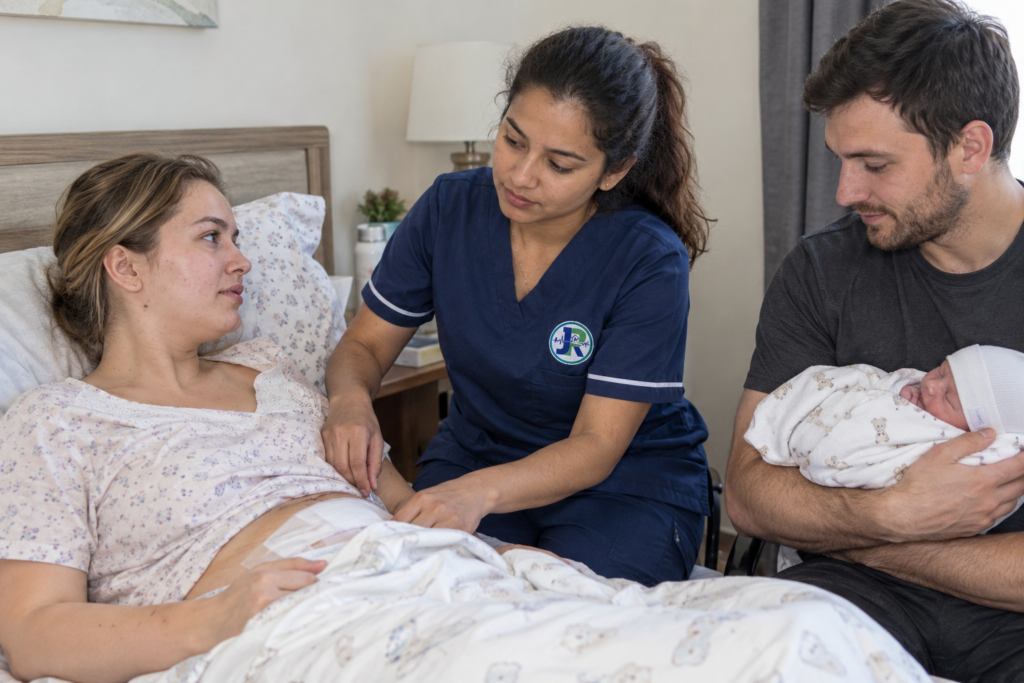
Relatives mean well, but a surgical wound and a body under strain need trained eyes. Complicated cases can include:
Anaemia, dizziness and weakness can persist, and new bleeding must be recognised fast.
Wound, womb or urinary infections can appear days after discharge, often quietly at first.
Blood pressure can stay unstable or rise again after delivery and needs regular readings.
Longer operations or a return to theatre mean deeper tissue healing and more pain to manage.
Blood sugar affects how well the wound heals and must be checked as advised.
Reduced movement and surgery raise the chance of leg clots, so mobility and prescribed injections matter.
Everything is guided by her obstetrician’s orders. We do not change treatment. We carry it out carefully and report concerns.
Checking the incision, changing dressings with sterile technique, and watching for redness, swelling, heat or discharge.
Giving pain relief, antibiotics and blood-thinning injections on schedule, with a written log for her doctor.
Regular temperature, pulse, blood pressure, oxygen and, where ordered, blood sugar readings.
Observing lochia (post-birth bleeding) and recognising when it is heavier than expected.
Helping her stand, walk and shower safely, with guidance on bracing the abdomen when she coughs or rises.
Comfortable feeding positions that avoid the scar, plus safe lifting and hygiene routines.
Encouraging iron-rich meals, fluids and fibre, and easing constipation after surgery.
Noticing persistent low mood, anxiety or sleeplessness, and advising when to involve her doctor.
An overnight nurse lets her rest between feeds and gives you uninterrupted sleep.
Every case differs, and her surgeon’s advice always comes first. This outline shows how nursing support usually changes over time.
| Stage | Her needs | Nursing focus |
|---|---|---|
| First 3 days at home | Strong pain, limited movement, high infection and bleeding vigilance | Frequent monitoring, medication timing, assisted mobility, first dressing checks |
| Days 4 to 14 | Growing independence, tiredness, feeding establishment | Wound review, clot-prevention walking, feeding support, reporting any change to her doctor |
| Weeks 2 to 6 | Healing continues, emotional adjustment, follow-up appointments | Step-down visits, activity guidance, mood observation, readiness for the post-natal review |
Our nurses are trained to spot these early and will escalate immediately. Emergencies should always go to hospital without delay.
A word to you, not just her. Husbands often absorb the stress silently while watching their wife in pain and a newborn in the next room. Asking for skilled help is not a sign of failing. It is one of the most practical ways to protect her recovery and your own health.
Not sure where to start? A free home assessment tells you exactly what level of care your loved one needs.
We send nurses to apartments and villas throughout the emirate, including:
Living elsewhere in Sharjah? Message us and we will confirm availability and arrival time.
It is professional nursing delivered in your own home to a woman recovering from caesarean surgery. The nurse handles wound care, gives prescribed medicines, monitors vital signs and bleeding, helps her move safely and supports feeding, always following the surgeon’s discharge plan.
A caesarean is usually called complicated when something beyond routine surgery occurs, such as heavy bleeding or a transfusion, infection, pre-eclampsia, an emergency or repeat operation, gestational diabetes, anaesthesia problems, a long hospital stay or a baby needing intensive care. Her doctor will explain which applied, and the nursing plan is built around it.
Most women need around six weeks for the wound and womb to settle, and complicated cases can take longer. Tiredness and low iron may linger for months. Healing is not a straight line, so follow her surgeon’s timeline and attend the post-natal review rather than comparing her progress with other mothers.
Keep it clean and dry, wash gently as instructed and pat it dry without rubbing. Support the abdomen with a pillow when she coughs, laughs or stands, and choose loose, high-waisted clothing. Avoid creams unless prescribed. A nurse changes dressings with sterile technique and records how the wound looks at each visit.
Watch for spreading redness, warmth, swelling, pain that grows instead of easing, pus or foul-smelling fluid, wound edges separating, and fever or chills. Report any of these to her doctor the same day. A nurse checks the incision routinely, so early changes are noticed before they become serious.
Call 998 if a pad is soaked within an hour, she passes large clots, has chest pain or breathlessness, a swollen painful calf, fainting, severe headache or blurred vision, a wound that opens, or any thought of harming herself or the baby. Do not wait for a nurse’s visit in these situations.
Bleeding called lochia is expected for four to six weeks. It starts bright red, then turns pink, brown and finally yellowish-white, and may increase briefly after activity. A sudden heavy flow, large clots, a foul smell or a return to bright red bleeding after it had lightened needs prompt medical advice.
Pain is controlled with the medicines her doctor prescribes, taken on schedule rather than waiting until pain becomes severe. A nurse gives each dose on time, tracks pain scores and tells the doctor if relief is poor. Never add other tablets without checking, especially while breastfeeding.
Surgery, blood loss and reduced movement raise clot risk. Short, regular walks as permitted, good hydration, calf exercises, compression stockings if ordered and prescribed blood-thinning injections all help. Nurses give injections correctly and watch for a swollen, hot or painful leg, which needs urgent attention.
Gentle walking with help usually begins on day one, and stairs can be taken slowly with support. Lifting anything heavier than the baby is generally avoided for around six weeks. Driving should wait until she can brake firmly without pain and her surgeon agrees. Complicated cases may have stricter limits.
Meals rich in iron, protein, fibre and vitamin C support healing and rebuild blood levels. Lentils, lean meat, eggs, leafy greens, dates, fruit and plenty of fluids are helpful. Take iron or other supplements only as prescribed, and follow a diabetic plan if she had gestational diabetes.
Usually yes. Side-lying and football-hold positions keep the baby off the scar. Some medicines or conditions need a doctor’s confirmation first. A nurse can help with latch, positioning and comfort, and can suggest a lactation specialist if feeding is painful or the baby struggles to feed.
Baby blues in the first two weeks are common, but low mood, anxiety, poor sleep beyond the baby’s schedule or difficulty bonding that persists may signal postnatal depression. Share night duties, listen without hurrying her, and speak to her doctor early. A traumatic birth can also cause lasting stress, so ask for help sooner rather than later.
Yes, and it is the best approach. Contact us with her expected discharge date, your area in Sharjah and a copy of the discharge summary if available. We plan the nurse’s arrival so that care begins when she reaches home, with no gap in monitoring.
We offer short visits for dressings and checks, daytime shifts, overnight nursing, 12-hour shifts and 24-hour care. Choose based on her doctor’s instructions and how much help the family can give. The plan can be adjusted as she gains strength, so you are not locked into the first arrangement.
The cost depends on how many hours per day and days you need, whether it is day or night care, and how complex her needs are, for example injections or wound dressings. We give you a clear written quote after understanding her situation, so you know what to expect before committing.
Coverage varies between insurers and plans, and some require a doctor’s prescription or prior approval. We can provide an invoice and nursing notes to support a claim. Check eligibility with your insurer before starting, and tell us if documents in a specific format are needed.
Yes. For post-natal care, most families prefer a female nurse and we prioritise this. Mention it when you book. If you also have a language preference, such as Arabic or English, tell us and we will try to match it.
Availability depends on your location and the time of request, but we handle urgent starts wherever possible, including evenings and weekends. The earlier you contact us, the easier it is to match the right nurse. We confirm the arrival time with you when booking.
Message us on WhatsApp or call. Share her discharge date, your area, a short summary of the complication and the shift type you want. We reply with a nursing plan and quote, introduce the nurse before she begins and stay in touch throughout the care period.
We cover apartments and villas across Sharjah, including Al Majaz, Al Khan, Al Nahda, Al Taawun, Muwaileh, Aljada, Al Qasimia, Rolla, Abu Shagara, University City, Tilal City and Al Zahia. If your area is not listed, contact us and we will confirm availability.
The nurse’s main responsibility is the mother’s recovery. She can also guide feeding positions, safe handling, cord and hygiene routines and safe-sleep practices. If you want dedicated newborn care as well, tell us at booking so we can plan suitable support.
Tell our coordinator and we will arrange a replacement so care continues smoothly. We make sure the new nurse is briefed on her condition, medicines and wound history, so she does not have to repeat everything.
Medicines come from her treating doctor’s prescription through your pharmacy. Nurses normally bring the instruments for routine checks, but dressing materials and special items vary by case. We explain at booking which items are included and which you should keep at home.
Speak with our clinical team about a care plan for your loved one — no obligation, just clarity.
Follow overview of JPR’s home nursing service
General senior home care services
Follow overview of Blood Test at home service
Follow overview of Physiotherapy at home service
Follow overview of Baby Care service
Follow overview of JPR’s home nursing service
This page is provided for general information and is not a substitute for a medical diagnosis or professional care plan. Please consult a qualified physician for diagnosis and treatment decisions, and speak with JPR’s clinical team to arrange an assessment suited to your loved one’s specific condition.
© 2026 All rights reserved |